Difficult Client Interactions: 8 Tips for Veterinary Teams
Mastering difficult client interactions is crucial for veterinary teams' success and mental health. Learn essential…

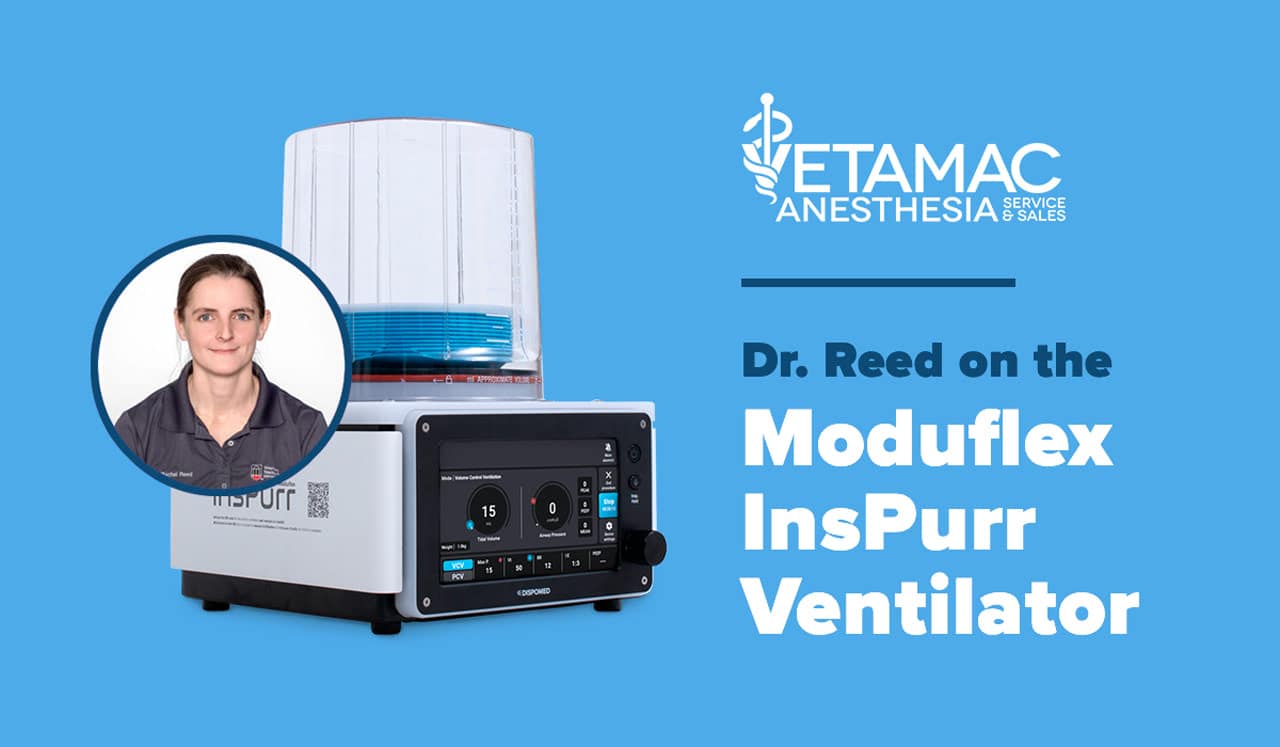
As a veterinary anesthesiologist, I commonly receive questions from veterinarians regarding the use of anesthesia ventilators in their practice. For any veterinarian that is doing more than just spay/neuter surgery in their practice, the ability to provide ventilatory support to their anesthetized patients greatly enhances patient care and safety. Nearly all pharmaceutical agents used for induction and maintenance of general anesthesia will cause varying degrees of respiratory depression. Even healthy patients undergoing general anesthesia can experience significant hypoventilation leading to hypercapnia, hypoxemia, and even death if this respiratory depression is not appropriately managed by the anesthetist. Patients that suffer from pulmonary disease will have reduced ability to withstand this respiratory depression requiring more rapid and diligent recognition and management of complications as they occur.
For practices without a ventilator, the anesthetist must be ready and able to provide positive pressure ventilation manually using the reservoir bag, until the patient stabilizes and begins breathing on their own. Due to this significant burden of responsibility to the patient in the peri-anesthetic period, many veterinarians become interested in purchasing a ventilator. For veterinarians that plan to perform intrathoracic procedures or procedures requiring the use of a paralytic agent, anesthetic ventilators become requisite for patient care.
Shopping for a ventilator can feel a little bit like walking around in the weeds; the options are extensive, the units can be very expensive, and if you aren’t familiar with ventilators, it’s hard to know which ventilator is the best option for your practice. I recommend ventilators that are intuitive in how they work, simple to setup, and that have fail-proof safety mechanisms.
A new ventilator can be overwhelming for staff members that do not have previous experience using a ventilator. Ventilators are complicated! And if you don’t use them correctly, it can harm the patient. Ventilators come in a variety of different designs with differing power sources, drive mechanisms, and control factors. I recently had the opportunity to use the Moduflex InsPurr ventilator for several weeks in our hospital and this has now become the ventilator that I recommend. The unit was incredibly easy to set up, has an easy-to-use touch screen control panel, and my technicians and students were in love.
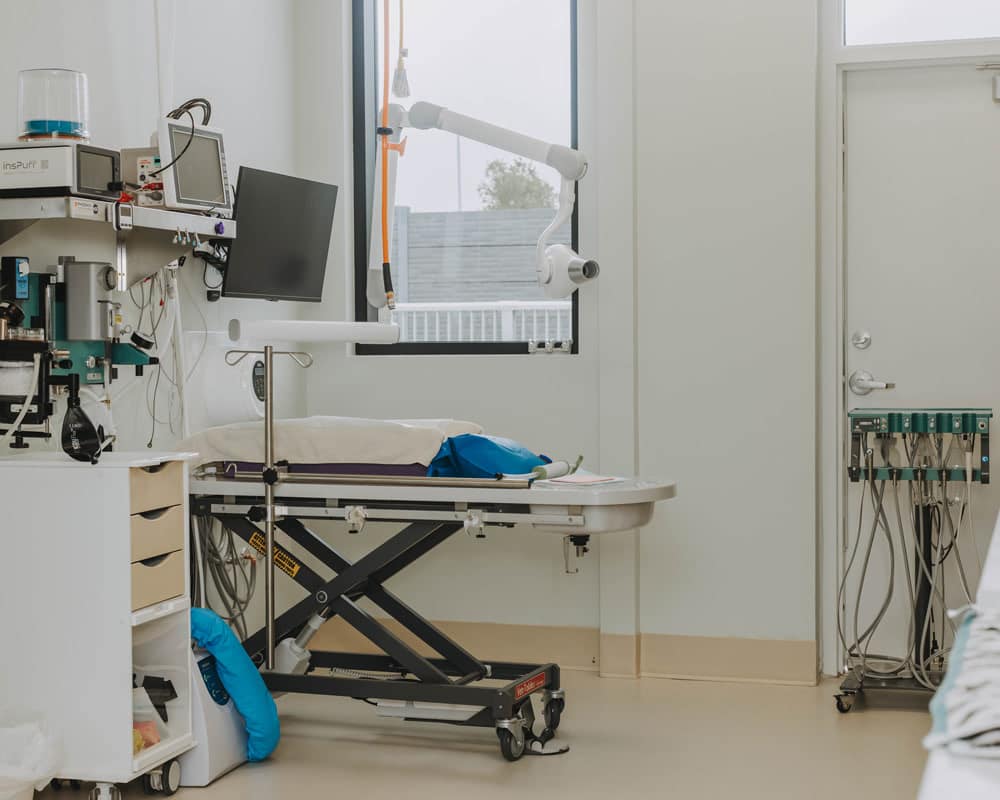
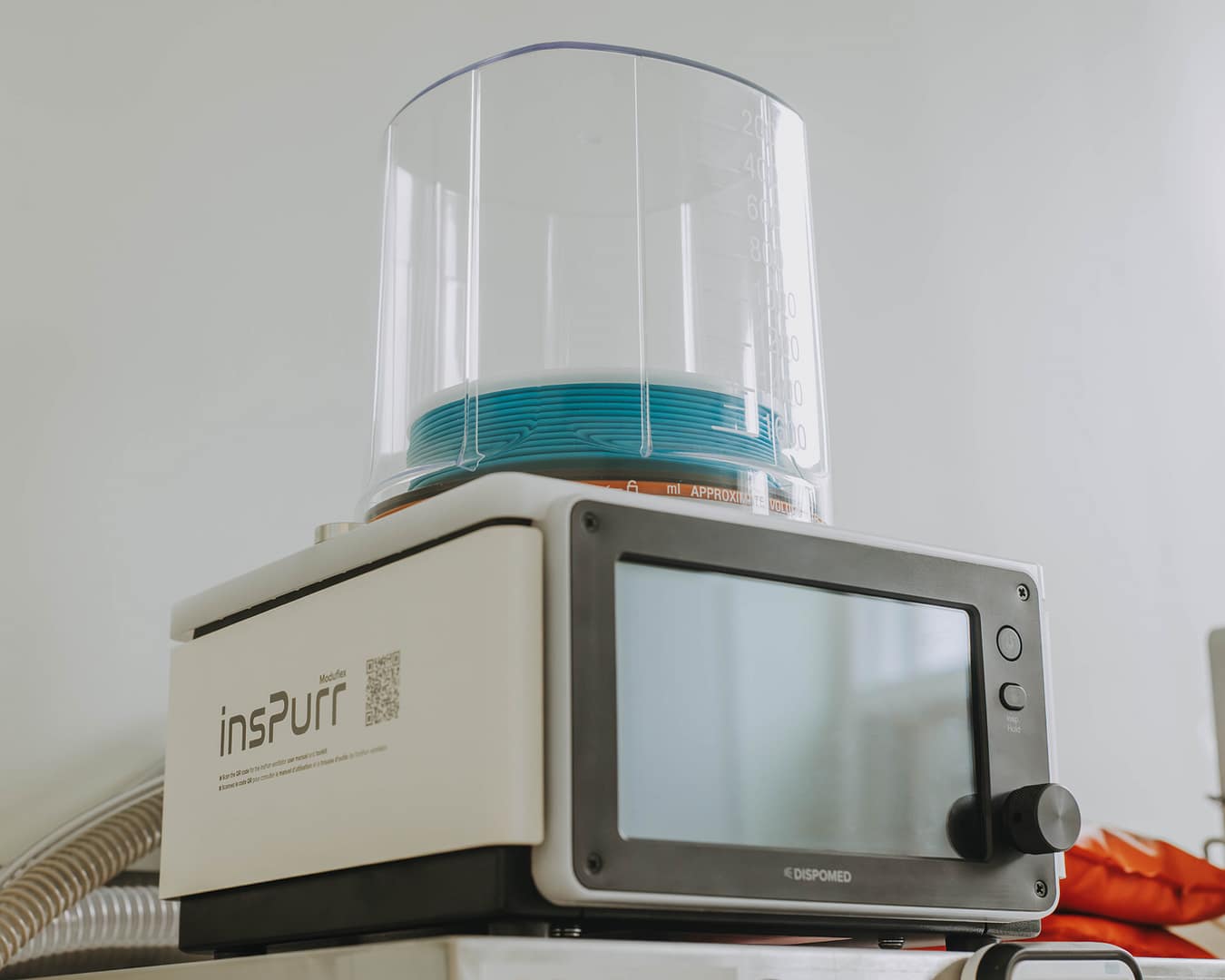
I was immediately impressed by the fact that this ventilator eliminates a lot of the aspects of other ventilators that can make them difficult or unsafe to use. First of all, no driving gas is required.
Most veterinary anesthesia ventilators are “dual circuit” ventilators, meaning that there is a compressible bellows inside a bellows housing case and the ventilator delivers a breath by increasing pressure in the ventilator housing forcing the bellows down. This has historically been achieved with attachment of a pressurized oxygen source to the ventilator. This meant users would need a setup that allowed for the anesthesia machine and the ventilator to source oxygen from the cylinder or house oxygen supply. It also meant that hospitals relying on an oxygen concentrator for their anesthesia machine would have to acquire a cylinder set up to use a ventilator.
The InsPurr ventilator is “dual circuit” in that it has a bellows inside a bellows housing; however, the increased pressure inside the bellows housing to deliver a breath is provided by a turbine within the unit itself! This not only simplifies the anesthesia machine and ventilator set up, but it also eliminates the cost of maintaining a driving gas supply and makes it possible for those hospitals that rely on oxygen concentrators to use the InsPurr ventilator without acquiring a driving gas source.
A further advantage of the turbine driven ventilation is that it is nearly silent in operation, promoting a peaceful and low stress work environment.
Secondly, most veterinary ventilators are adjusted using knobs on the front of the unit that change the frequency of the breaths administered and flow of oxygen into the bellows housing. Use of these knobs requires some amount of guess work and users only become proficient in adjusting the ventilator after using it many times.

This guesswork is eliminated by the InsPurr, simplifying the complex process of mechanical ventilation. The device does all the calculations for you by requiring only the entry of the animal’s weight. Once this single parameter is provided, the system automatically adjusts all ventilation settings, including tidal volume, respiratory rate, and peak inspiratory pressure, to provide standard tailored configurations for the patient. All these settings are fully adjustable allowing the anesthetist to change the settings if necessary to meet the needs of the patient.

Uniquely, the InsPurr also allows either volume-controlled ventilation or pressure-controlled-ventilation, meaning that the anesthetist can dictate the size of the breath administered by controlling either the tidal volume or the peak inspiratory pressure. For both ventilation modes, a built-in safety mechanism will prevent administration of too large of a breath that would cause barotrauma or volutrauma.

I was further impressed by the ability to apply Positive End Expiratory Pressure (PEEP) using the ventilator with just a push of a button! PEEP can be incredibly helpful for patients that are not oxygenating well due to the development of atelectasis during the anesthetic event.

This simple and easy-to-use operation outlined above means that the ventilator will streamline clinic workflow, allowing skilled anesthetists to focus on other critical aspects of patient care rather than manually “bagging” a patient. Additionally, the system utilizes a single bellows unit for both pediatric and adult patients, eliminating the need to switch components and further enhancing clinic efficiency.
Third, I was very impressed by the safety of using the InsPurr ventilator. The device features a large touchscreen that provides a complete overview of the patient’s ventilation, allowing anesthetists to capture subtle nuances and respond to changes promptly.
The InsPurr includes a robust alarm system with high and medium-priority alerts for out-of-range parameters. It also incorporates internal respirometry to measure the patient’s lung volume, ensuring each breath is delivered at an accurate positive pressure.
A critical step in the use of ventilators that often gets skipped or performed incorrectly is the initial leak check that should be performed prior to use. The InsPurr walks the anesthetist through this process as soon as the machine is turned on, literally leak checking itself! This not only ensures that the leak check is completed, but also that it is done correctly and that there are no leaks before it is used on a patient.
Overwhelmingly, I think the InsPurr ventilator is an excellent option for veterinarians in search of a ventilator that will be simple to use and provide state-of-art ventilatory support for their patients. Indeed, after using the InsPurr on my own clinical patients, I was ready to replace all my current ventilators with InsPurr units!