Introducing Convenient Email Invoicing with Secure Payment Links!
Get ready for streamlined email invoicing! Receive invoices directly to your inbox with a secure…

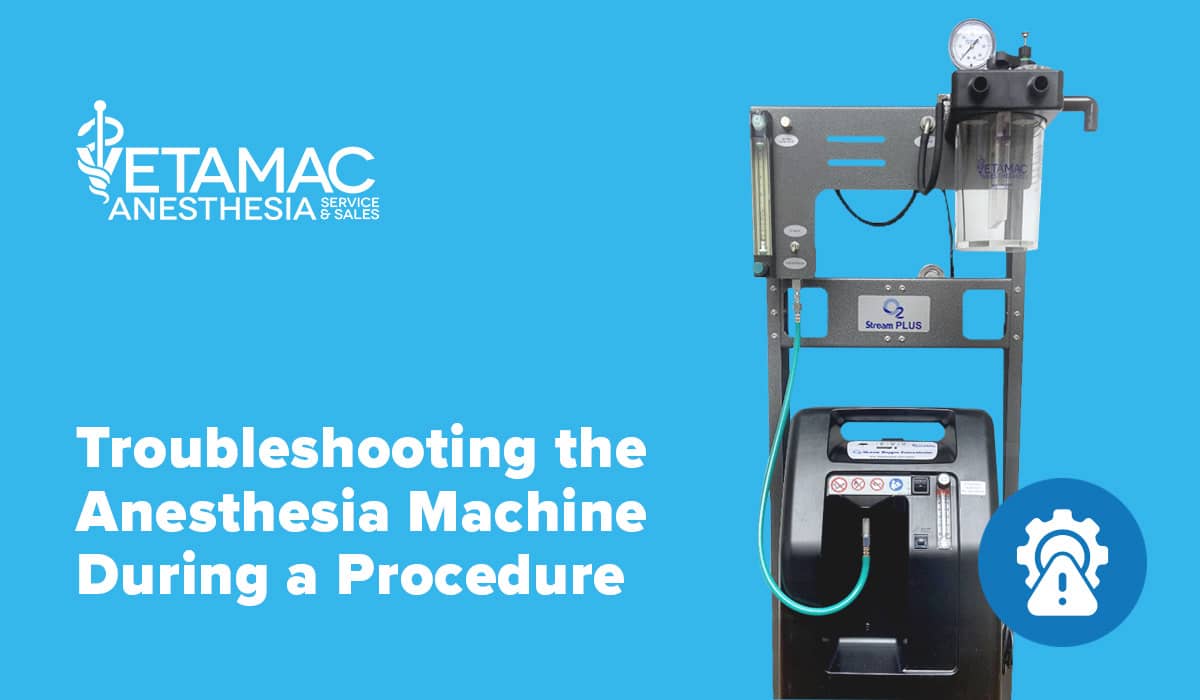
Sometimes problems with the anesthesia machine are not found until the patient is under anesthesia, which is very stressful to the anesthetist. All attempts should be made to stay calm and have the ability to react quickly to solve any arising issues that could be detrimental to the patient. It is also important to rule out whether the issue is technique or machine related. There are a variety of technique issues ranging from inadequate pain control to a leaking endotracheal tube. This article will focus on equipment related issues.
To test your endotracheal tubes, submerge the entire tube (with the cuff inflated with air) in a tub of water. Check for any bubbles coming from the inflation valve, pilot balloon, its line, or the cuff. If you observe bubbles, discard the endotracheal tube. Note that some silicone tubes have replacement parts available.

A new leak in the anesthesia machine could present itself during a procedure. This could be discovered because the patient is not at an adequate plane of anesthesia. This happens because too much room air is entering the anesthesia machine, which dilutes the anesthetic agent. The smell of anesthetic might be present. Leaks may also create difficulty in manually ventilating the patient. Correct the leak if possible. If not, the machine should be switched out with another. If the leak is not isolated the machine should be serviced by a service company.
Another issue that may arise during a procedure is malfunctioning of the one-way valve disks. The purpose of the one-way valve disk is to ensure proper fresh gas flow: fresh gas is always flowing to the patient and expired gas is always flowing away from the patient. One-way valve disks can become warped or stick. If the one-way valve disk becomes warped, it will not seal correctly on the one-way valve seat and will allow gas exchange. If ETCO2 monitoring is being utilized this will reveal itself by ICO2 levels present. Hyperventilation will occur with increased CO2 levels and perhaps be mistaken for a light plane of anesthesia. If the one-way valve disks are warped new valve disks can be ordered and installed. If the valve disks are sticking, they can generally be wiped clean and put back in place. Keep breathing circuits and bags unattached to the machine when not in use to decrease the amount of condensation buildup in the anesthesia machine.
One more complication that can arise during a procedure is vaporizer output problems. If the patient is not staying at a good plane of anesthesia and is too light, the vaporizer concentration may be excessively low. Or if the patient is becoming excessively deep the vaporizer concentration may be excessively high. If either is suspected the vaporizer output should be verified by a service company or the vaporizer can be sent into a service company for cleaning and recalibration.
Work Cited: Anesthesia for Veterinary Technicians by Susan Bryant, Veterinary Anesthetic and Monitoring Equipment Cooley 2018, Dorsch and Dorsch 2008.
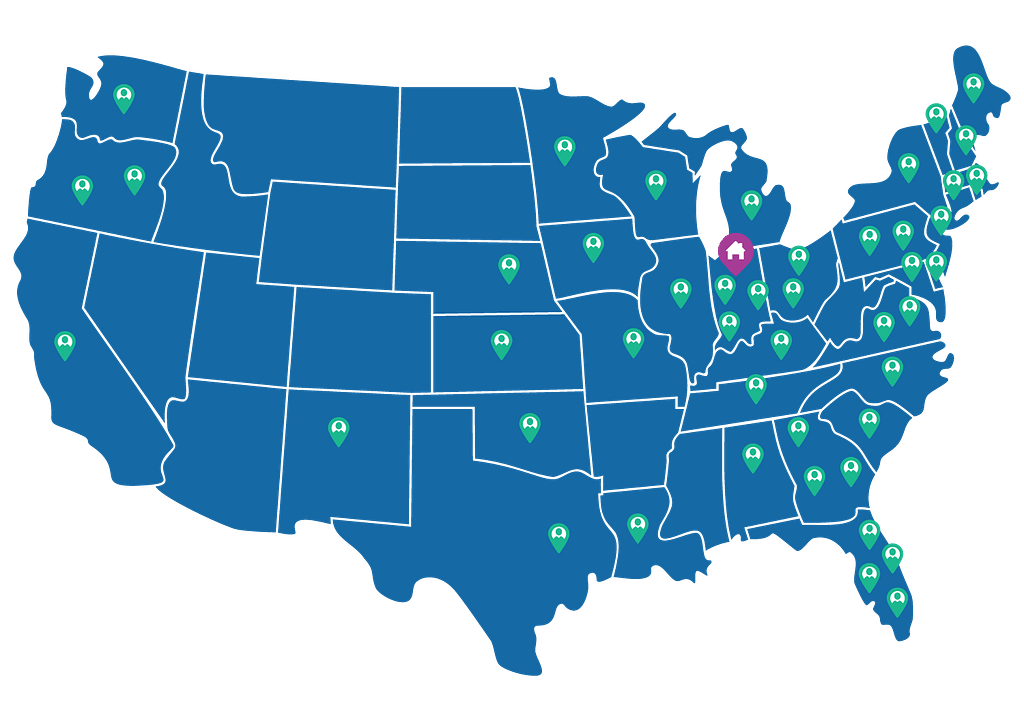
Did you know Vetamac is present and covers more than 30 states in the USA? At Vetamac, we understand that providing the best care for your animal patients requires reliable and expertly maintained veterinary equipment. That’s why we take pride in offering industry-leading veterinary equipment services that are designed to meet the unique needs of veterinary clinics and professionals. Our commitment to excellence is showcased through our extensive expertise and experience in this domain.