Vol. I: Basic Function of the Anesthetic Machine: Oxygen Delivery and Proper Flowmeter Usage
Learn the basics of anesthetic machines, including oxygen delivery, flowmeters, and proper usage for safe…

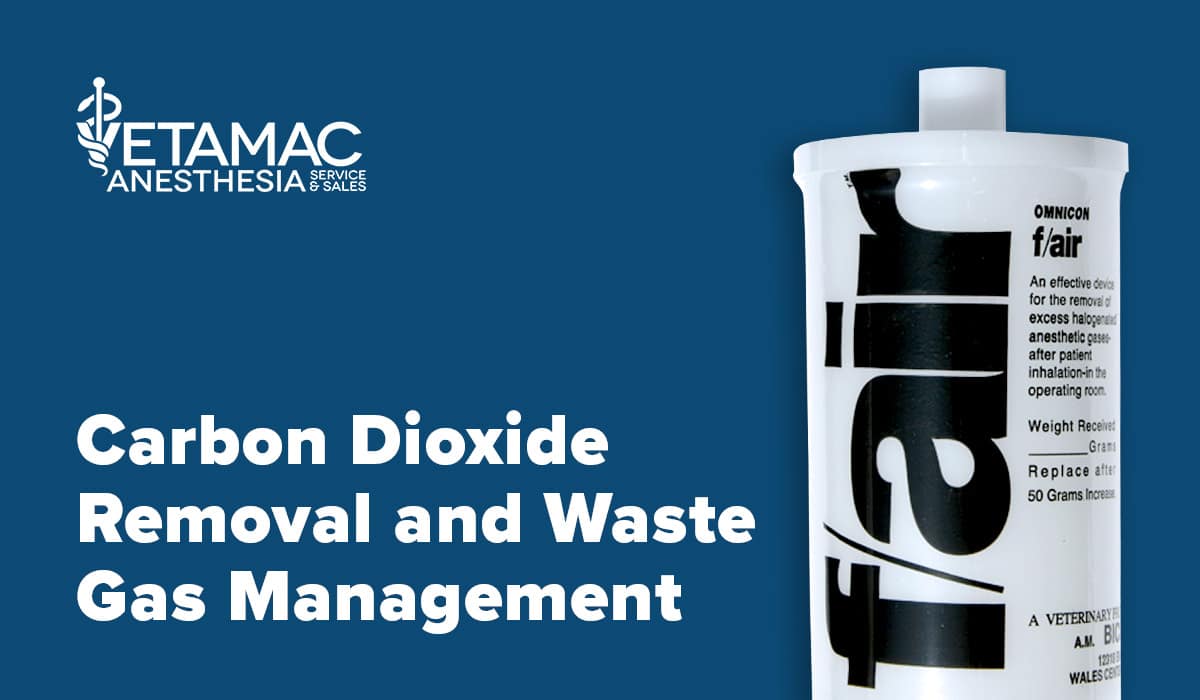
The anesthetic machine must remove carbon dioxide. There are several components necessary in a rebreathing system to remove the carbon dioxide.
There must be a container for baralyme or sodalyme granules which chemically remove the carbon dioxide from the circuit. When these granules are fresh, they are soft and easily crumbled between the thumb and forefinger. When they are expired, they are hard and cannot be crumbled.
The granules contain a dye that turns blue when they react with carbon dioxide, but will return to normal color after several hours. The color should be assessed immediately following the procedure so there is no question about how much is actually expired. If 1/3 to 1/2 of the granules are blue, they should be changed.
It should be noted, in some canisters “channeling” of the gas occurs and there may be color change that is not visible on the outside of the canister. The granules should be changed once a month regardless of color change.
Another component that is necessary to remove carbon dioxide is the one-way valves. These are check valves that allow the gas in the circuit to move only in one direction. Therefore, fresh gas is always being moved toward the patient and expired gas away from the patient.
Most valves are horizontal discs that open and close individually based on patient inspiration and expiration. The one-way valves, in effect, minimize the amount of mechanical dead space that is created by the machine. In a properly functioning rebreathing circuit, this is the space from where the inspiratory and expiratory tubes join to where the endotracheal tube attaches. On most machines, the discs are enclosed in a clear chamber that allows visual verification of proper function.
The final component on the machine that removes carbon dioxide is the Adjustable Pressure Limiting (APL) Valve or pop-off valve. Since the flow of fresh gas into the system is greater than what the patient removes, there must be a way for the excess gas to be removed.
With a high fresh gas flow, more carbon dioxide will be removed through the APL valve and vice versa. This valve is usually located near the expiratory valve or the rebreathing bag. It is very important to keep the valve open unless positive pressure is being used to inflate the lungs. If the valve remains closed, pressures will be created in the system that will be fatal to the patient.
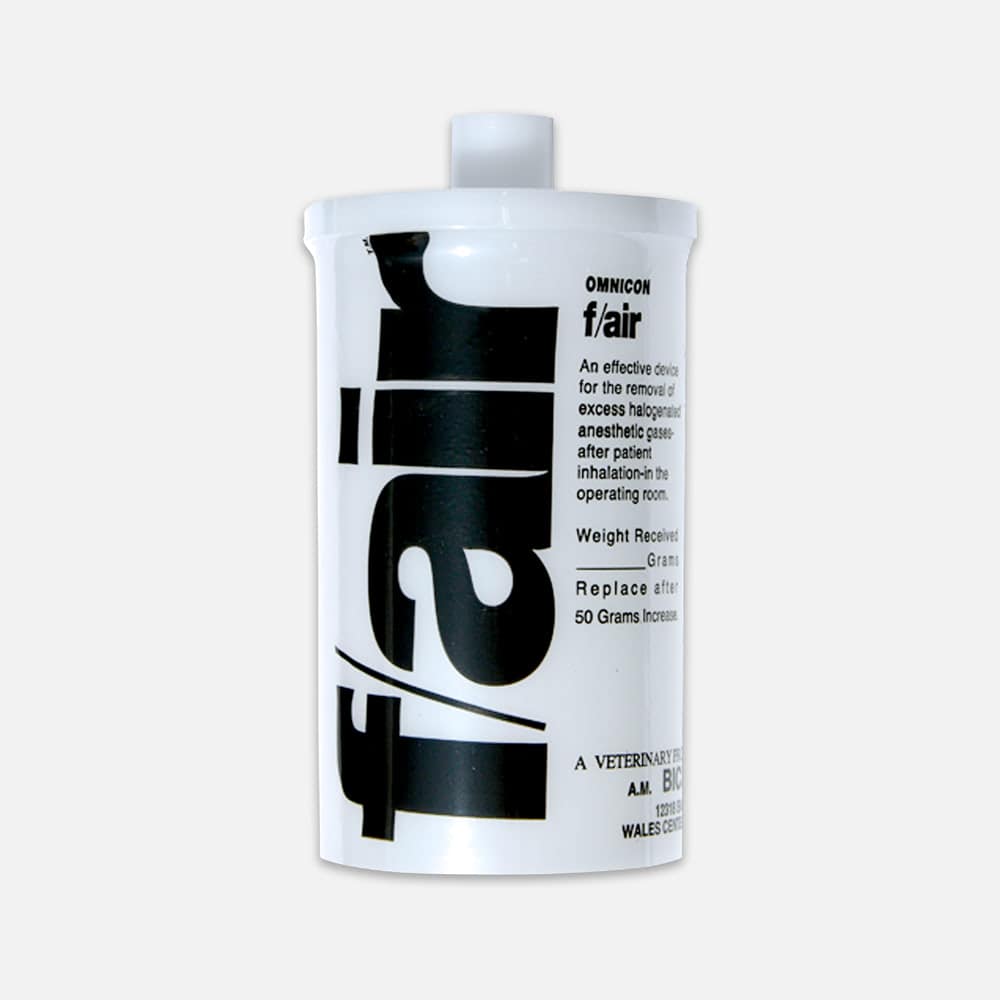
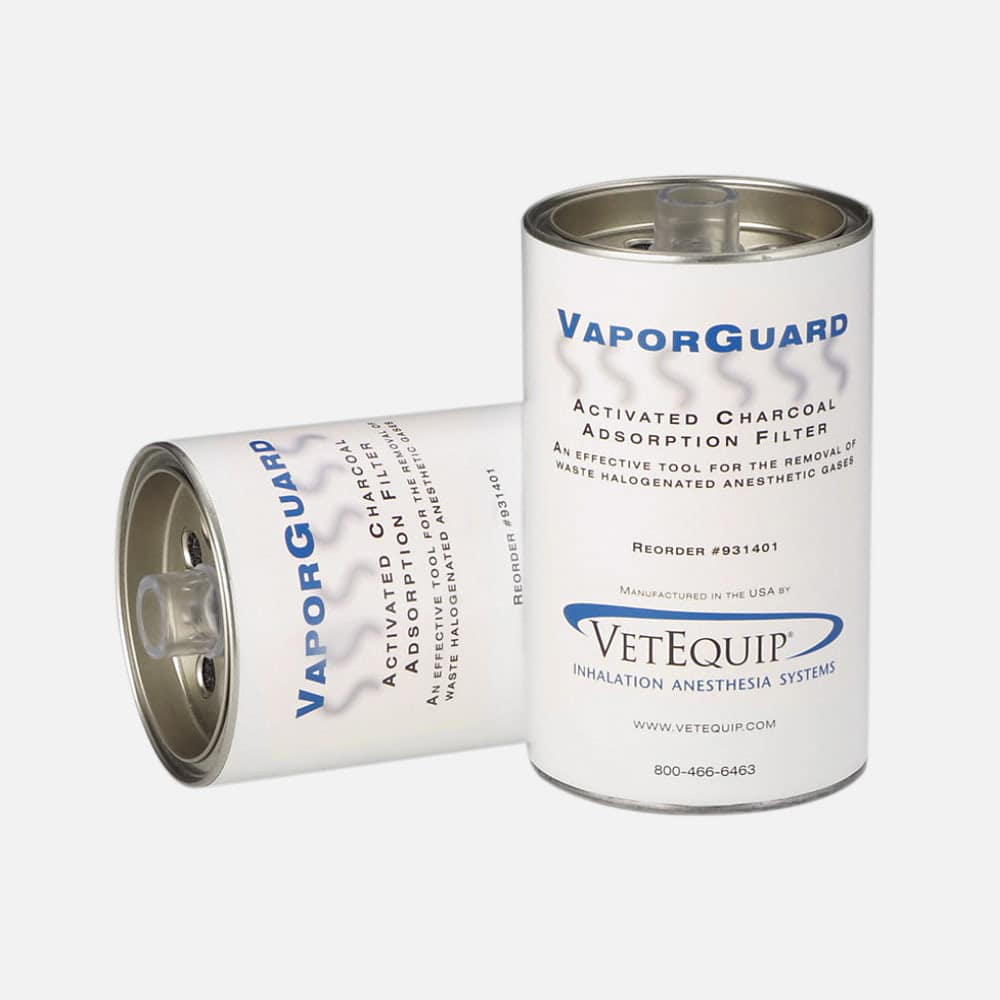
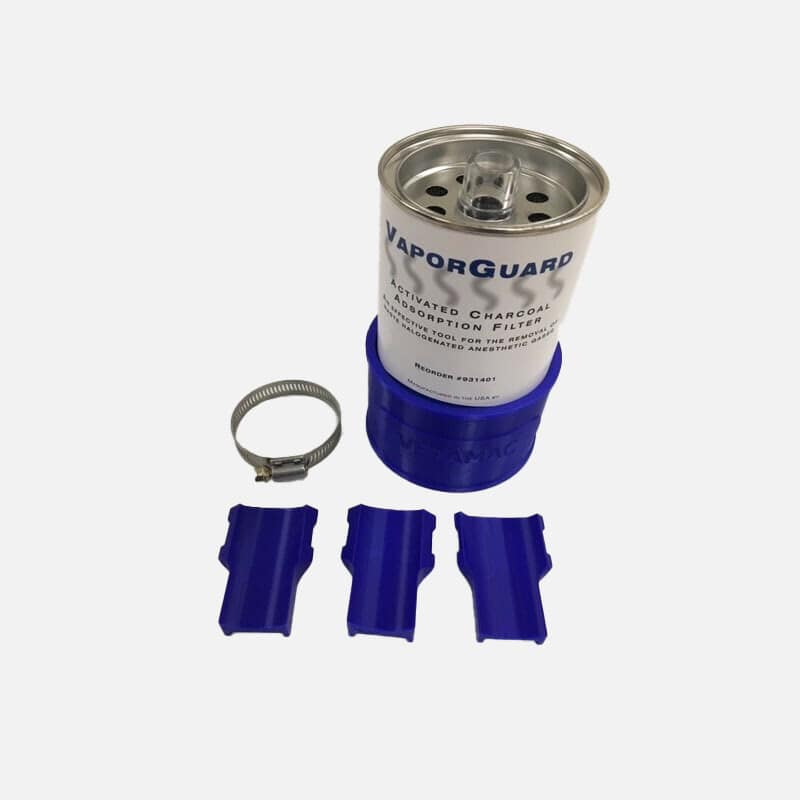
Since anesthetic gas is removed through the APL valve, it also performs the final function of the anesthetic machine: to remove waste anesthetic gas (WAG) from the work environment. All APL valves are designed to receive an evacuation tube that carries the WAG to the evacuation device.
There are three basic methods to remove the WAG:
The passive system is simple and inexpensive, but is not suitable for large hospitals that have multiple locations for evacuation. The best and most effective method for WAG evacuation is an active system. The WAG is removed by a fan or vacuum system located either on the machine or in a central location.
If an active system is used, there must be an atmospheric interface that allows room air to enter the system so that any negative pressure created will not draw gas out of the breathing circuit. If a vacuum pump is used to evacuate WAG, there must be a device on the interface to adjust the amount of room air entering the system. These systems are very effective and minimize the exposure to WAG.
The final component is the non-rebreathing system, which is a very simple delivery system used primarily in small patients. It consists of a patient connection, a fresh gas port, a valve to close the system to “sigh” the patient, a breathing bag, and a WAG connection.
There is no resistance to breathing with this system, and removal of carbon dioxide is accomplished by the fresh gas flow. Delivery of oxygen and anesthetic uses the same components as the rebreathing circuit. The higher-than-normal fresh gas flow makes this system less economical than the rebreathing system.
The two most common types of non-rebreathing systems are the Bain Circuit and the Modified Jackson-Rees.
All anesthetic machines perform four basic functions. Understanding the system is necessary for a subsequent understanding of how the machine affects drug uptake and distribution.
New Products, Veterinary Specialist Articles