
HTP-1500 Quick Guide Maintenance & Troubleshooting
Complete HTP-1500 pump maintenance guide for veterinary clinics: routine care schedules, and error fixes, and…

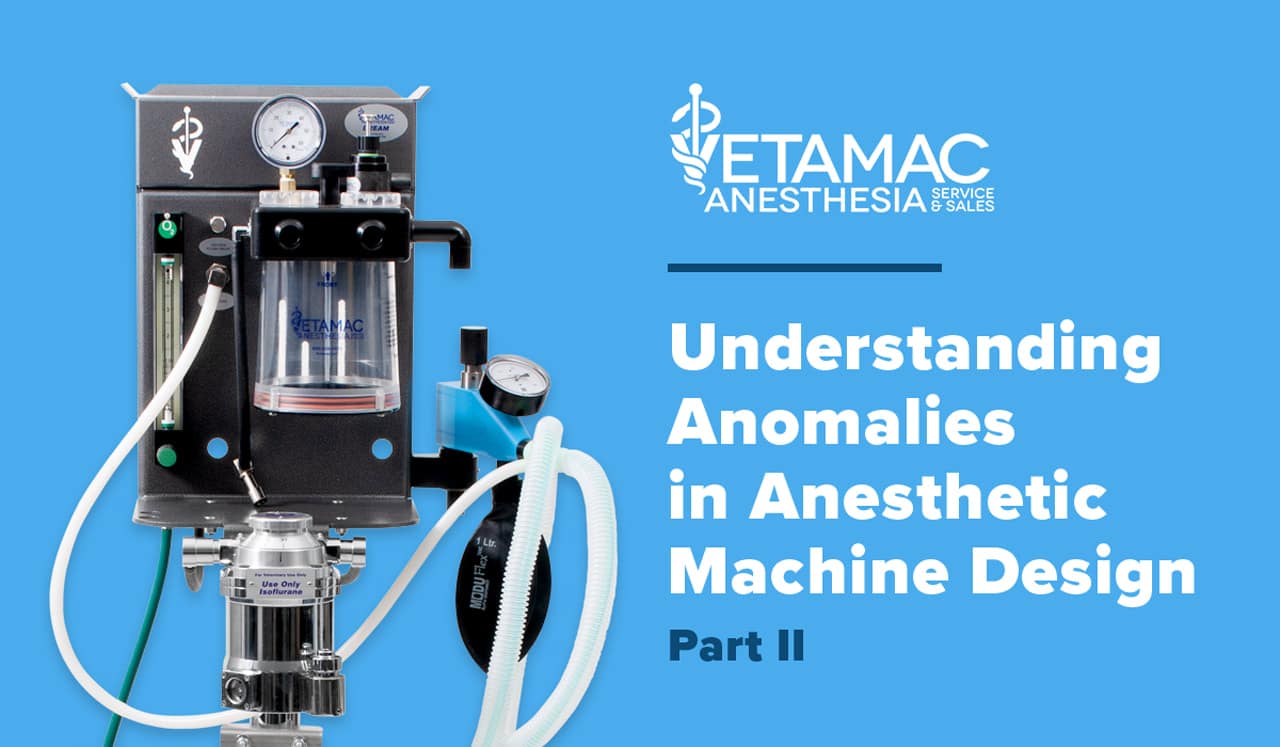
The last issue of Vapors discussed “congenital” anomalies which are present in an anesthetic machine due to the characteristics in the design and manufacture of the machine. This issue will deal with “acquired” anomalies resulting from exposure to environmental forces but these can be prevented and corrected.
This discussion will focus on the problems that are a result of use and/or abuse of the anesthetic machines. These anomalies, though more serious than congenital anomalies, are usually preventable and correctable.
One of the most frequent of these is abuse of the flowmeter. The two most frequent abuses are over-tightening the knob on the needle valve and using the flow meter as a handle to move the machine. Both of these can result in broken parts that will require repair or replacement of the flowmeter.
The flowmeter can also fail because of dirt in the flow tube. This is a result of old 02 hoses that are deteriorating or simply an accumulation of dust and dirt over a long period of time.
Another frequent problem is with the sodasorb canister. The most serious abuse is failure to change the granules. This results in moisture buildup in the canister and other machine components. This moisture has an alkaline pH and deteriorates both the rubber seals and the canister. Granules should be changed at least every month or more often if needed. Care should be exercised to avoid granules lodging between the canister and the bottom seal causing a leak. Do not over-fill the canister because this may also result in granules being lodged on the top of the canister creating a leak.
The vaporizer is the most expensive component on the anesthetic machine and sometimes receives the least care. The fill cap and funnel spout need to be cleaned each time the vaporizer is filled with agent. A gauze pad moistened with alcohol can be used to wipe the cap and spout before the cap is replaced. This prevents dirt from getting in the vaporizer as well as assuring a good seal on the 0-ring on the cap. Occasionally a vaporizer is filled with the wrong agent. If this occurs the vaporizer should be drained, attach the breathing tubes and bag, connect the machine to an appropriate WAGES, and plug the patient connection on the breathing tube. Turn the 02 flow to 51/m and turn the vaporizer dial to the highest setting for 2 hours. This will dry the vaporizer and it can be filled with the correct agent.
The outside of the vaporizer should be cleaned regularly with a moist towel to remove all dust, hair, and dander.
The fresh gas flow is occasionally corrupted either by user negligence or by machine malfunction. The most common is the improper use of the flush valves to fill the bag. The only time this is appropriate is if the user wants to fill the bag with pure 02. Many anesthetic procedures are made more difficult by improper use of the flush valve.
It is also possible for the flush valve to malfunction. This occurs because the flush valve does not close properly and allows 02 to slowly leak into the system, diluting the concentration of anesthetic. This leak can be detected by doing a pressure test and observing the pressure manometer. If the pressure rises slowly this is an indication that the flush valve is leaking. (This also assumes that the needle valve on the flowmeter is closed.)
Fresh gas flow can also be corrupted by improper connections in the system. If the fresh gas tubing is disassembled or disconnected for maintenance or repair, ensure that the tubing is replaced correctly. If the flow of 02 is incorrect it may be a risk to the patient or result in damage to the machine.
Care must be exercised when connecting breathing tubes and WAGES tubing. All breathing connections are 22mm and most pop off valve connections are 19mm. However, some older va Ives have 22m m connections. Connecting the breathing tubes to the WAGES fitting or vice versa may result in injury to the patient. Always try to use 19 mm tubing for WAGES connections to avoid confusion.
The most common acquired anomaly on anesthetic machines is neglect. Daily maintenance and cleaning should occur. Remove all breathing accessories, rinse them and hang them to dry. If a coaxial breathing tube is used, inspect it for any connections that may have come apart. Wipe all excess moisture out of the one way valves and the canister assembly and remove all dirt, hair or other foreign material from the anesthetic machine. Neglecting these sometimes unpleasant tasks can eventually lead to problems with the machine.
There are no safe anesthetic agents!
There are no safe anesthetic procedures!
There are only safe anesthetists using safe anesthetic machines!