Did You Know Your Oxygen Costs? Discover How Much You Could Save!
Discover how much you could save on oxygen costs with our insightful guide. Uncover potential…

Waste anesthetic gas (WAG) evacuation is often overlooked as a function of the anesthetic machine. If WAG is not properly removed from the machine then the patient, staff and environment are at risk of exposure.
A review of the evacuation of WAG can be found in past Vapors issues written by Harry Latshaw (Vol. IV, Issue 4, Vol. V, Issue I and Vol. V, Issue II). This issue will provide a brief review, everyday problems/solutions and new products available to veterinary practices. which can be found at Veta mac.com under the Knowledge link.
The passive evacuation system is commonly used for veterinary anesthesia machines. This system consists of 19mm evacuation tubing at the exit port of the pop-off value (POV) attached to an activated charcoal canister. The activated charcoal will inactivate halogenated anesthetics only (nitrous oxide must be removed via an active system). It is important to keep all activated charcoal canisters in an upright position.
The charcoal canisters with holes in the bottom (ex: F/air and Breath Fresh) will require a holder to keep them elevated. This will allow the flow of gas to pass freely through the bottom. If allowed to lay on their side during use the halogenated anesthetics can channel through the canister and not be inactivated. This will result in little or no change in the original weight of the canister. To help reduce the disposal of the entire canister, companies now offer refillable canisters. There is also a refillable canister available that holds twice as much charcoal (100 gm vs. 50 gm).
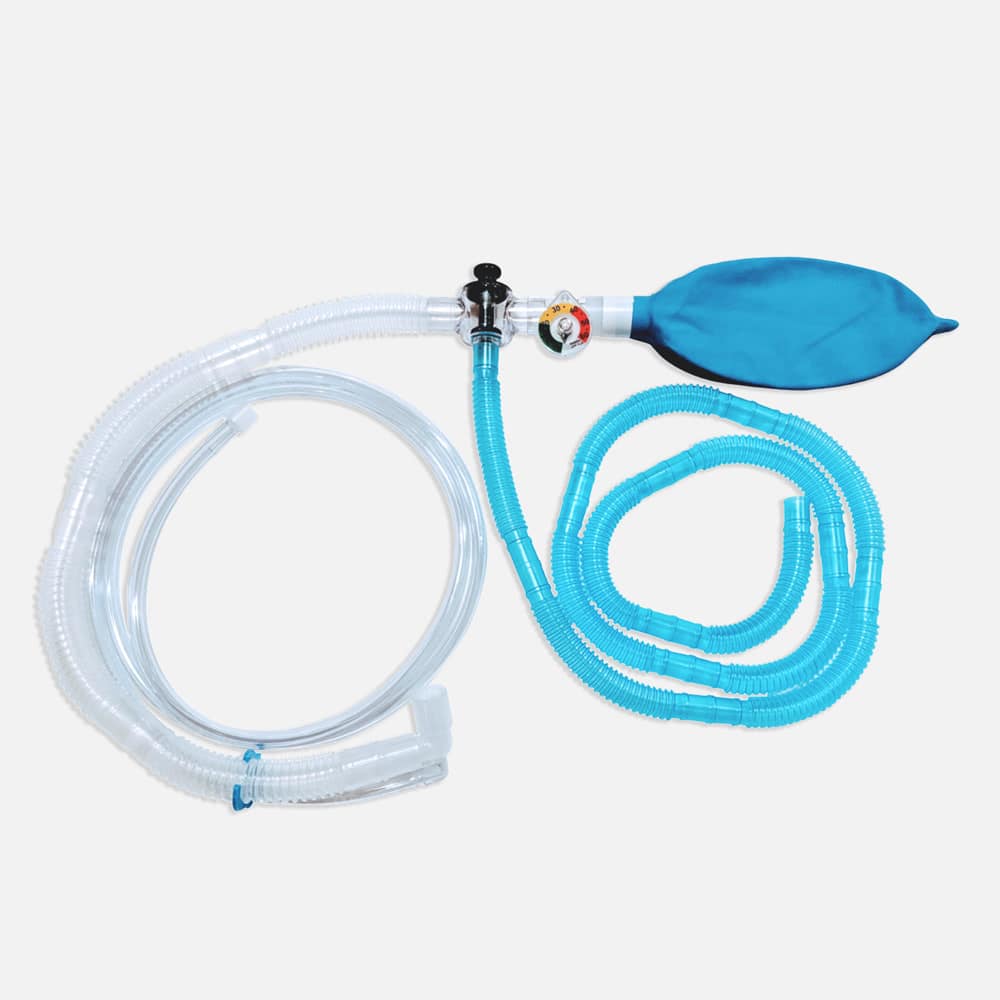
A common complaint from clinics using either a charcoal canister or PVC pipe to an outside wall is “my rebreathing bag is too full”. With a passive evacuation system, the circle system (re breathing bag, soda lime canister, breathing tubes and one-way valves) must fill with gas in order for the excess amount to start passing through the POV and therefore into the scavenger system. The rebreathing bag is not considered too full if there is < 4 cm H2O registering on the manometer on the anesthesia machine. If the pressure exceeds 4 cm H2O and continues to build, then the problem needs to be investigated.
Check the following as possible solutions:
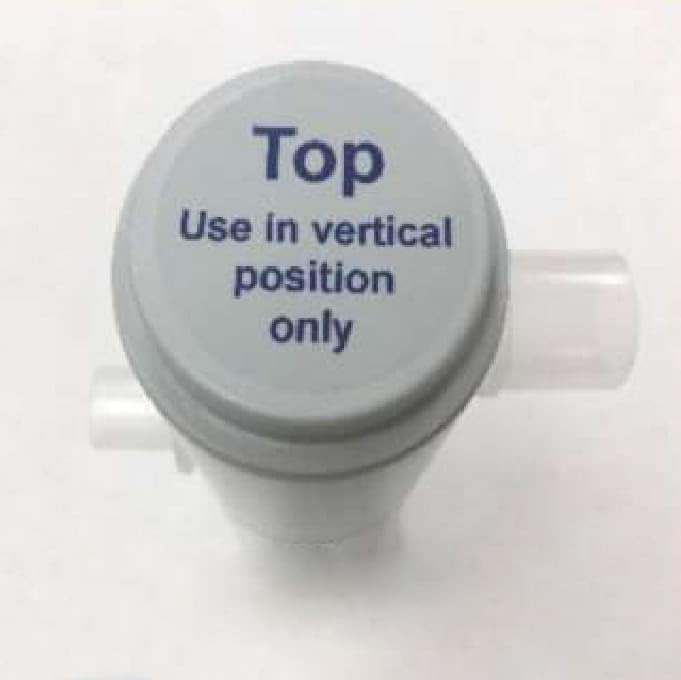
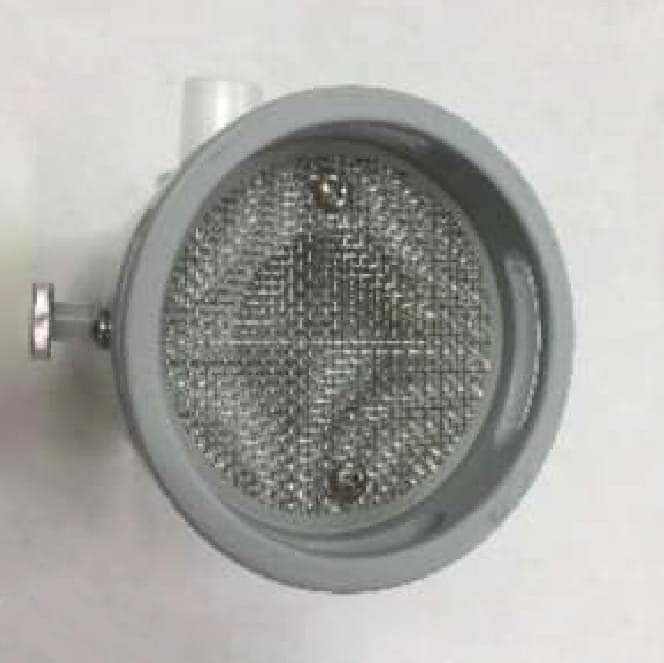
WAG can also be removed by using one of two types of active systems. Negative pressure (vacuum) svstems are commonly used in large hospitals and universities. They require a vacuum pump, copper piping and quick connects mounted to at the each anesthesia anesthesia machine. station. This These is the systems most also expensive require system an for adjustable WAG but scavenger highly effective. interface which is mounted to the anesthesia machine. This is the most expensive system for WAG but highly effective.
The most common active system for smaller hospitals is referred to as a flow system. This system requires a small enclosed fan vented to the outside that is connected to a piping system of 1 ½” PVC pipe. Each evacuation station must have a balancing valve that will assure each station receives the same flow. An atmospheric interface must be used since the flow system can create a slight negative pressure on the rebreathing bag. One of the problems with an atmospheric interface is when the rebreathing bag is emptied rapidly the excess WAG escapes into the room.
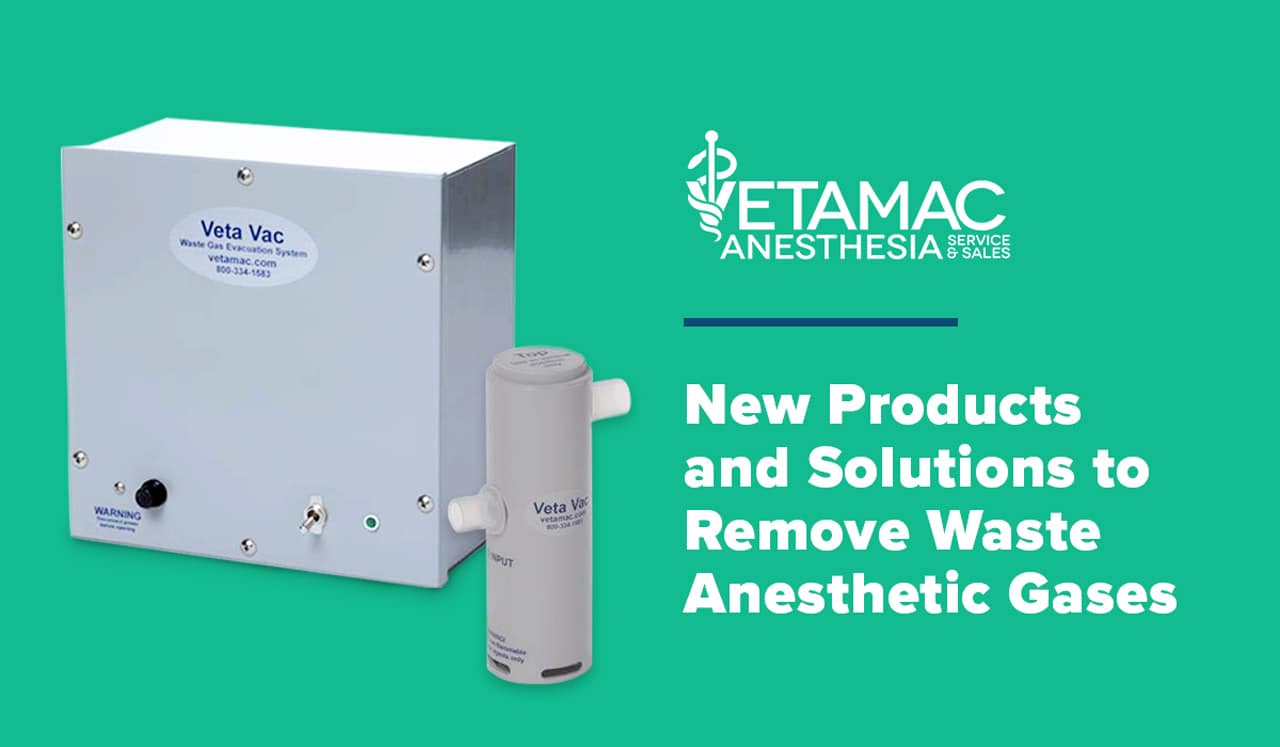
The newly designed Veta Vac atmospheric equalizer eliminates this problem by using a check (one-way) valve at the bottom of the equalizer. Other atmospheric interfaces have an adjustable dampervalve at the top with a screen that can allow WAG to escape into the room. The top of the Veta Vac atmospheric equalizer is enclosed therefore dust and hair cannot impede the flow ofroom air. Because this equalizer is “closed” when the bag is emptied, there may be some back pressure. Therefore, the user must observe the manometer on the breathing system as the bag is emptied and must not exceed 10cm H2O.
Vetamac is proud to provide a new and improved active scavenger system, the Veta Vac. Please contact the home office or any of our service technicians for more details. We can also provide help with the installation of all brands of active scavenger systems.


Veterinary Specialist Articles