Did You Know Your Oxygen Costs? Discover How Much You Could Save!
Discover how much you could save on oxygen costs with our insightful guide. Uncover potential…

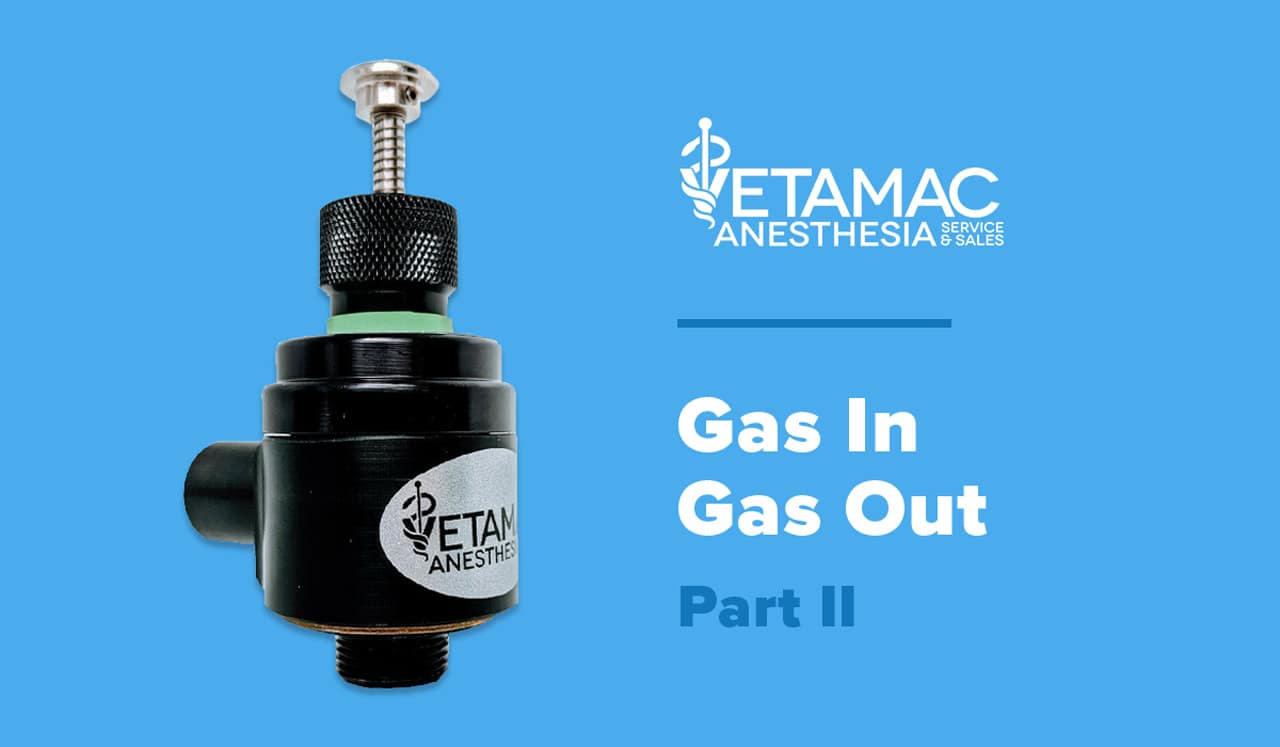
The previous issue of Vapors discussed the functions, uses and problems associated with the anesthetic pop-off valve on a rebreathing system. This issue will continue the discussion of the rebreathing system and then will discuss the pop-off valve on the nonrebreathing system.
The first question was with regard to the use of a PEEP valve to prevent problems if the pop-off valve is left closed. PEEP valves are used to maintain a Positive End Expiratory Pressure during mechanical ventilation. Some are adjustable and others are preset for a certain pressure. A PEEP valve preset for 20 cm H2O is occasionally used as a ‘safety valve’ to prevent extremely high pressures in the breathing system. The valve is installed on the inspiratory limb of the breathing system using an adapter. If the pop-off is left closed, the pressure will not go above 20 cm H2O but will stay at 20 cm H2O until the pop-off valve is opened. This raises another question: What causes the death of a patient when the pop-off is left closed while using a PEEP valve?
Many times the cause will be attributed to alveolar rupture due to the pressure. This seems plausible but is probably not what occurs. The pressure slowly increases because the bag is distendable and the flow rate is low. Therefore, when the pop-off is closed with a 2-liter bag on the system and a flow of 1 liter/minute, it will take less than 2 minutes to reach 20 cm H2O. Remember, as the bag is pressurized, it is also increasing in volume. During this time, the tidal volume of the patient is decreasing because of the increasing pressure on the airway. Therefore, by the time the pressure reaches 12-15 cm H2O, the tidal volume is reduced to zero and the patient begins to suffocate. This pressure is by no means enough to create alveolar rupture but if the pressure is not relieved quickly, death will occur. By the time the pressure reaches the point of alveolar rupture, irreversible damage has already occurred. If the bag is smaller, the time to reach 20 cm H2O will be shorter and if the bag is larger, it will be longer. Therefore, a PEEP valve is not recommended as a safeguard against a closed pop-off valve.
Another question that arises is with regard to using a mechanical ventilator. The pop-off valve must be closed when a ventilator is in use, yet there is not a problem with airway pressures that are too high. This is because ventilators have a pop-off valve that closes during inspiration but opens during expiration allowing excess gas to escape. When the patient is removed from the ventilator, the pop-off must be opened.
What if the pop-off valve is open and working properly but pressure is still rising in the breathing circuit? This indicates there is an obstruction in the evacuation system. This problem presents itself most often with passive systems (Vetamac Vapors December 2008) that are vented to the outside. If the outlet is not protected, insects or rodents may invade the pipe and obstruct the flow of gas. Even though this is not a problem with the pop-off, it prevents the flow of gas out of the breathing system and will “appear” to be a problem with the popoff valve.
Now what about using the pop-off valve on a nonrebreathing (NRB) system? The same principles apply but with a NRB system, the bag is usually very small, the fresh gas flow is higher, and the events transpire very fast if the pop-off remains closed. The NRB system is usually used on patients that have a smaller tidal volume. This means that the time required to reach critical pressures is even shorter. There are anecdotal reports of death in cats on a NRB system in less than 3 minutes.
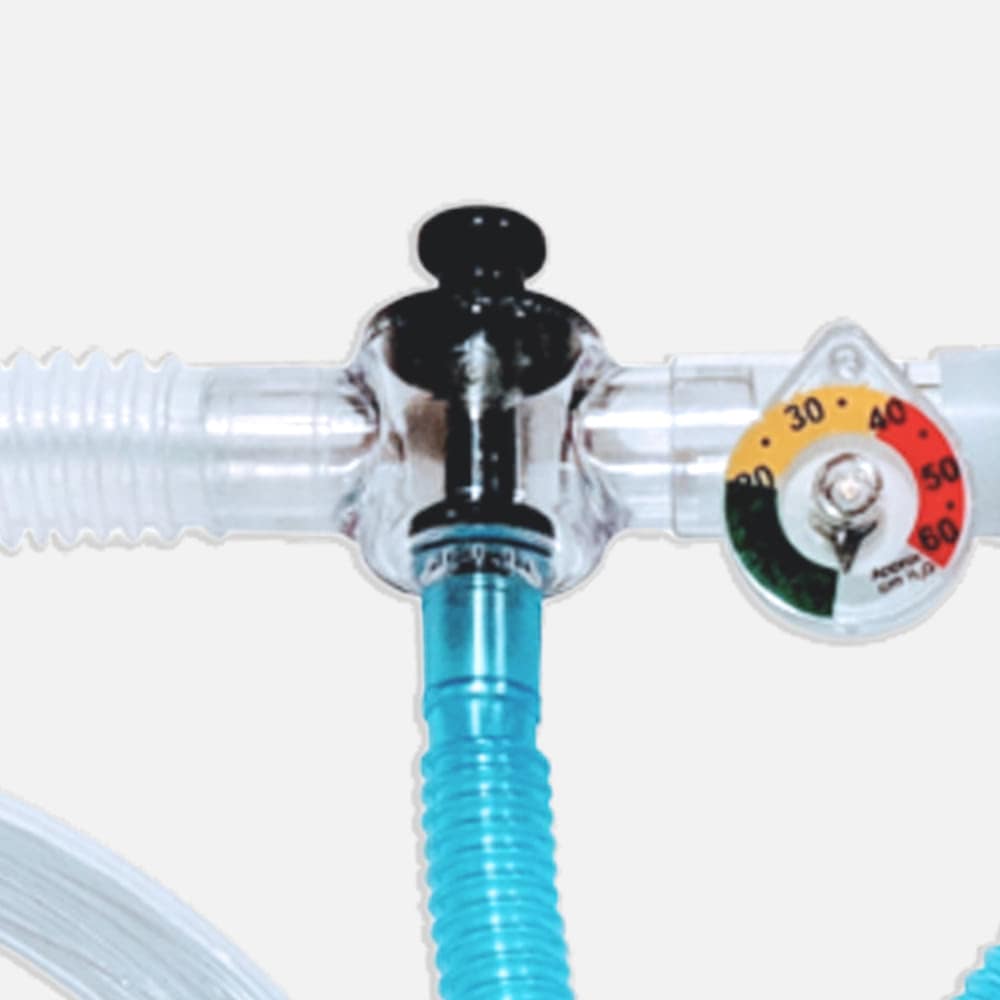
On most non-rebreathing systems, the pop-off valve must be closed by sliding or turning the closing mechanism and the valve will remain closed until manually opened. The SafeSigh NRB system is highly recommended because it has a pop-off valve that cannot be left closed. The “One Touch” valve stem is depressed to close the valve while the patient’s ventilation is assisted. When the valve is released, it opens automatically and remains open. The SafeSigh is distributed by Vetamac.
The pop-off valve is necessary for the release of excess gas in the system and is also necessary to assist patient ventilation. Failure to use the pop-off valve properly can result in Significant Negative Outcomes (SNO).


Veterinary Specialist Articles