
Did You Know Your Oxygen Costs? Discover How Much You Could Save!
Discover how much you could save on oxygen costs with our insightful guide. Uncover potential…

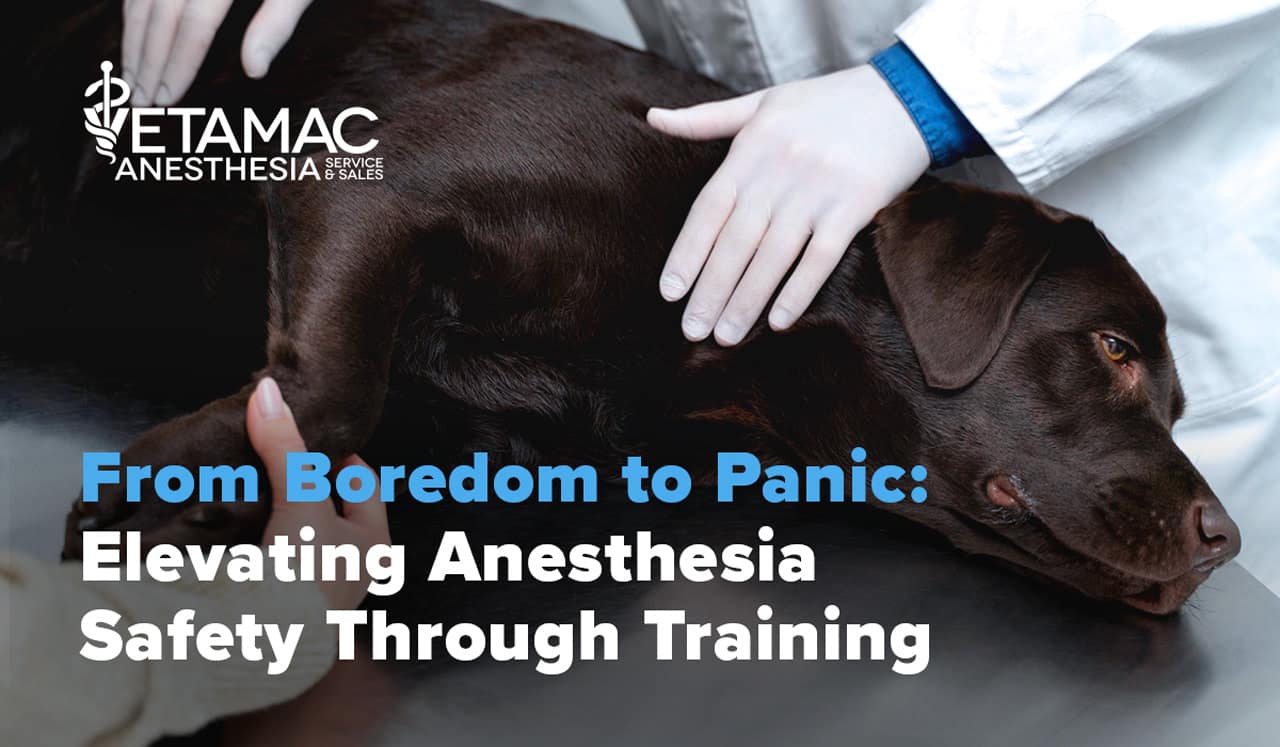
Anesthesia has been defined as hour after hour of boredom interspersed with moments of sheer panic. The cause of these “moments” many times rests with the anesthetists and their ability to recognize and solve the problem.
– Dr. Robert Smith, MD
This is a commonly quoted proverb in the world of anesthesia. It is very true and yet sometimes over simplified by the assumption that the anesthetist is “safe”. The first two statements are a matter of protocol. Most practices have protocols regarding the use of anesthetic agents and the procedure they are performing. However, this issue of Vapors addresses the need for a protocol to assure that those staff performing inhalation anesthesia are adequately trained to maximize the safety of the patient as well as members of the staff.
Since there are only 220 board certified DVM anesthesiologists and 172 members of the Academy of Veterinary Technician Anesthetists certified in anesthesia, very few practices are able to have one of these specialists overseeing anesthesia procedures. As a result, almost all anesthesia in practice is performed by veterinary technicians that don’t have specialty training. These staff members have various levels of education and experience which results in various skill levels related to anesthesia. The staff member may not be prepared to handle a problem if the anesthesia procedure deviates from the normal.
– Dr. Bill Lumb, DVM
This is another proverb in the world of anesthesia and is also very true. When staff move from one practice to another, this results in new techniques, protocols and anesthetic machines. All of a sudden, the staff member is not doing anesthesia the way they are used to doing it. This situation is exacerbated by the number of different anesthetic machines in veterinary practice. Staff members often comment that “this machine does not look like the one in school” or “this machine is different than the one I used before”. Even though there is no difference in the way the machines function, there is a difference in the way they look and that is not what the staff member has been used to seeing.
How can the practice be assured that their staff are “safe anesthetists” and that they administer anesthesia the way they are “used to doing it”? There are several options that can effectively improve anesthesia skills. The first is organized continuing education. This context usually brings together experts in the field that can communicate the information effectively. A hands-on workshop is preferable to a lecture format because the attendees have an opportunity to apply what they have learned. Two disadvantages of this option are that it is off-site and any references to anesthetic machines may not include the machine(s) in your practice.
Another option is in-service training that takes place in the practice. This offers the opportunity for the presenter and the staff to focus specifically on the equipment and protocols familiar to the staff. If the individual staff members have questions related to use of the equipment, they can be addressed and answered individually. This option really individualizes the communication necessary to increase the skills of the staff. Vetamac’s service representatives provide this training which can be scheduled at your convenience.
The third option is reading anesthesia textbooks and articles. This requires a small library that includes textbooks and articles. There are also many articles and textbooks available online but the source should be verified. Another online option is Vetamac Vapors. There have been 34 issues of Vapors dating back to 2005. They are all available online at www.vetamac.com under the “blog” section.


Veterinary Specialist Articles