Difficult Client Interactions: 8 Tips for Veterinary Teams
Mastering difficult client interactions is crucial for veterinary teams' success and mental health. Learn essential…

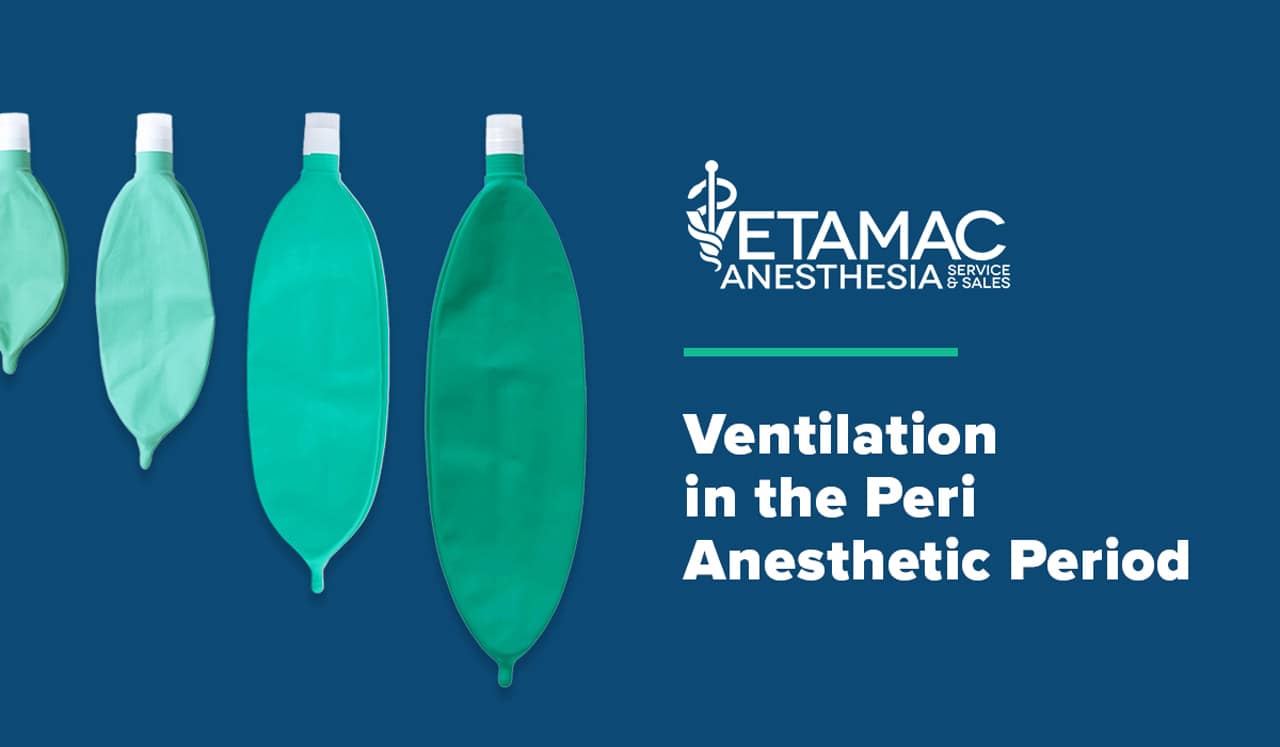
Every anesthetized patient will have compromised respiratory function. Some factors that can contribute to this are medications such as opioids which are crucial for pain management, patient body condition (particularly obesity), breed, disease processes or injury to the chest and abdomen and patient positioning for procedures. Most patients undergoing anesthesia will have the aforementioned medications on board and be positioned in a way that is not compatible with normal respiratory function.
A respiratory rate (RR) under anesthesia can be anywhere from 8-14 breaths per minute, give or take some breaths. It is difficult to provide a “hard and fast” norm because there are several factors that can affect a “normal rate” so a resting (un-anesthetized) RR should be recorded as a baseline as part of a standard pre-anesthetic TPR. The size of the patient or breed and obesity can also decrease ability to ventilate properly at rest as well as under anesthesia. It should be expected that with brachycephalic breeds, extreme respiratory challenges due to anatomic abnormalities can occur in all stages of the anesthetic period.
Another important aspect that should be addressed in the pre-anesthetic period is stress and anxiety. Oxygen consumption rises with anxiety so these patients also require diligent monitoring and treatment of their condition should be considered.
If the patient can tolerate it, a simple and highly effective procedure called pre-oxygenation should be implemented. Every patient can benefit from this procedure. The purpose of this treatment is to increase oxygenation within the functional residual capacity (FRC) in the lungs (Bryant 2010). Simply turn on the flowmeter and deliver 100% oxygen by holding the wye of a breathing circuit to the patients nose or using a mask (diaphragm not necessary). Preoxygenation can be performed for 3-5 minutes before induction of anesthesia. lt takes only 90 seconds for a patient that has not been preoxygenated to become hypoxemic as compared to 3-4 minutes in a preoxygenated patient (Bryant 2010). Hypoxemia is decreased arterial oxygenation. Oxygen saturation is typically monitored on a pulse oximeter and has a normal range of 90-100% (Bryant 2010).
Certain pre-anesthetic drugs such as opioids and alpha 2 agonists can have a dose dependent effect on respiration. Many anesthetists are looking to a multi-modal approach in selecting pre-medications; this means they are using a low dose of multiple drugs to decrease adverse effects of those drugs (such as respiratory depression). The use of pre-anesthetic drugs can allow you to decrease the dose of inhalant anesthesia creating an overall balanced anesthetic protocol.
02 consumption for a normal patient is 4-7ml/kg/min. The suggested flow rate for a rebreathing circle system is usually 22-44ml/kg/min and a non-rebreathing system is 100-300ml/kg/min. For example, a 30kg dog would need a minimum of 660ml/min-1320ml/min on a rebreathing system. A 7kg cat would need a minimum of 700ml/min to 2100ml/min. You can see that these recommended flow rates are much higher than consumption requirements and the main reason for this is that you can make changes in depth much faster at this rate. Additionally, a higher flow rate can assure adequate flow for the proper performance of the variable-bypass vaporizer (Bryant 2010). Increasing the 02 flow rate can decrease the time to reach the percentage of inhalant indicated on the vaporizer dial.
Hypoventilation is when the patient has a lower RR than what is considered normal for them. Some reasons for this could be anesthetic depth is too great or the patient is simply unable to ventilate properly for reasons discussed in the first and second paragraphs. This can be monitored by a respiratory monitor such as the Breathe Safe respiratory monitor, a capnograph or capnometer.
Hyperventilation is when the patient is breathing much faster than what is acceptable. Some common factors that cause hyperventilation are break through pain or an insufficient plane of anesthesia. Assisted ventilation can be implemented to help move the patient to a better plane and is accomplished by closing the pop off valve and squeezing the reservoir bag to deliver a volume of gas to the patient.
By looking at the manometer gauge on your anesthesia machine you can visualize the airway pressure you are delivering. This pressure is referred to as peak inspiratory pressure (PIP) and is measured in cm of H20; it should not go over 20cm H20 unless directed by the veterinarian. Increased airway pressure can cause great trauma to the respiratory system. When squeezing the reservoir bag, try to mimic a natural “sigh”, then reopen your pop off valve. NEVER leave this closed; failure to open the valve can be fatal.
Adequate ventilation is vital to the gas exchange tissues in the alveoli in the lungs. Alveoli are tiny little air sacs in the lungs that rapidly uptake CO2 and eliminate it through the lungs as well as supply 02 to the bloodstream. Assuming these alveoli are perfused, they are sensitive and need optimal respiratory function to perform their job. If ventilation is compromised they can collapse and cause a condition known as atelectasis. This means that in the affected alveoli there is no gas exchange occurring. This will cause hypoxemia and be reflected in a drop in Sp02 readings. A great way to attempt to prevent atelectasis is to perform assisted ventilation at least once every 5 minutes in an anesthetized patient. This will also ensure a more constant delivery of inhalant anesthetic, smoothing out your anesthesia episode. More manual ventilation may be needed if extreme hypoventilation is occurring but you should always assess the patient’s depth prior to anything else.
When discontinuing your inhalant, leave your patient on 02 for an additional 5 minutes prior to disconnecting from the machine. The other very important advantage is removal of waste gas anesthetic out the scavenge system rather than in the room, exposing staff members to unnecessary anesthetic waste gas.
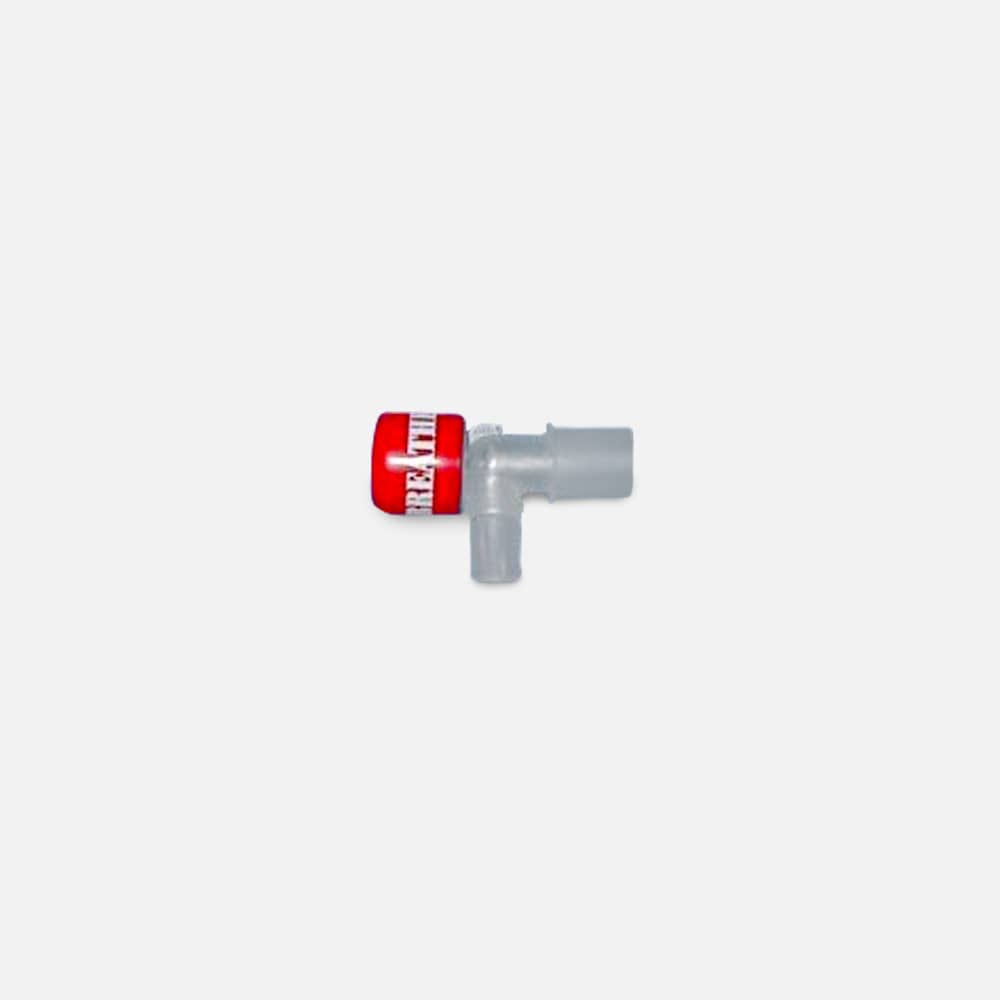
Respiratory rates should be monitored well into the post anesthetic period until the patient is extubated. This is another good indication for the Breathe Safe respiratory monitor. This monitor is placed at the end of the endotracheal tube and will sound or “chirp” with every breath that passes through. This product has an apnea alarm that sounds if the patient has not breathed for 45 seconds.
While there are many obstacles that may be encountered with any patient under anesthesia; it is the responsibility of the anesthetist to project and manage these problems. Some of these techniques are not mandatory but if implemented, can produce optimal results for the patient.