Vol. VII: Understanding Dead Space in Anesthesia
Learn about mechanical dead space in anesthesia, its impact on CO2 levels, oxygen, and anesthetic…

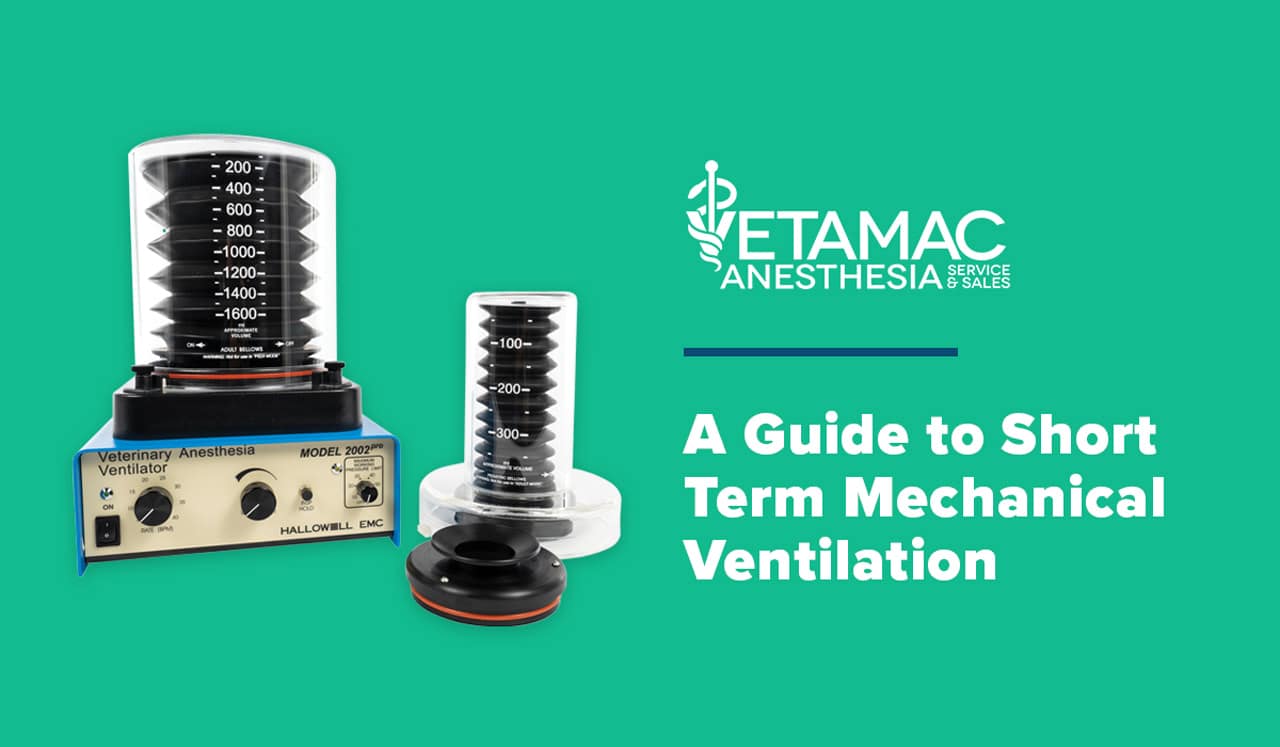
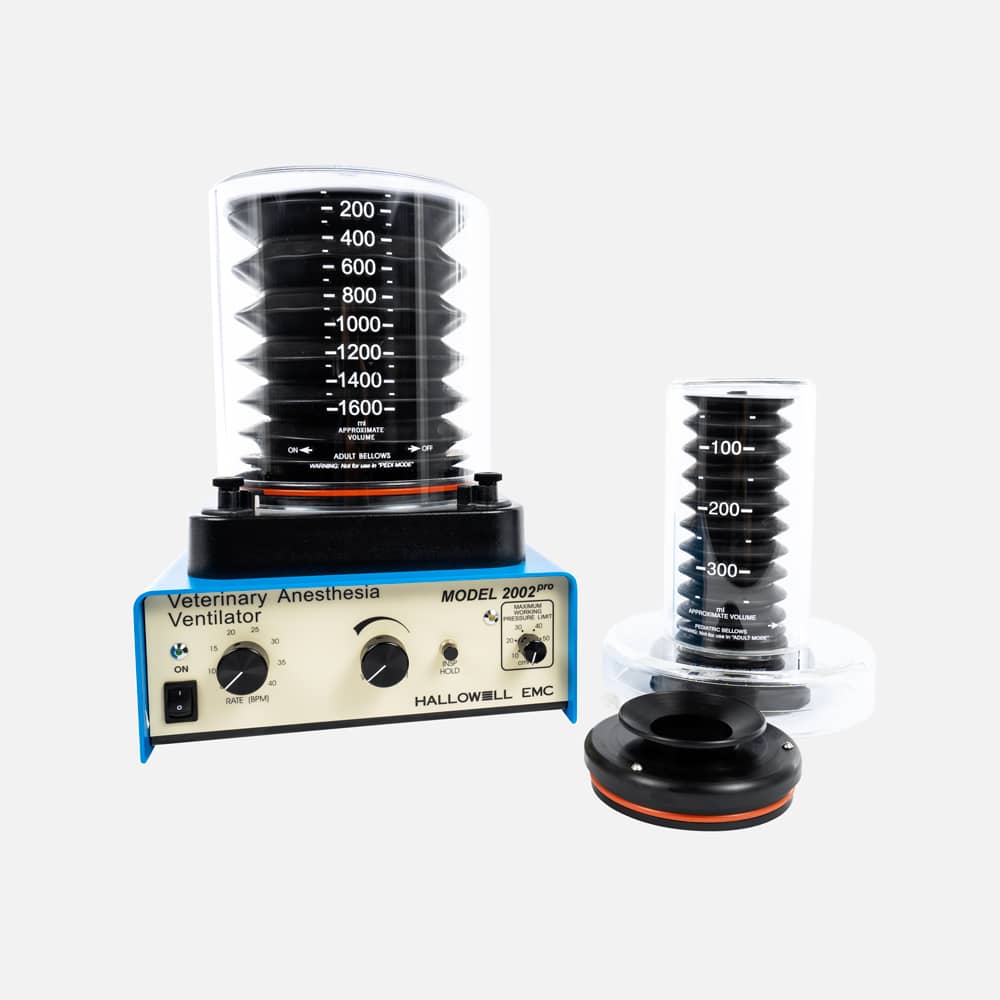
Ventilation of the lung is defined as the mass movement of gas into and out of the lung. It is essential that the patient has sufficient alveolar ventilation, in other words, that the volume of inspired gas is sufficient to maintain normal partial pressures of arterial oxygen and carbon dioxide. Mechanical ventilation may be provided manually by compressing the reservoir bag intermittently. However, in some cases, a mechanical ventilator is preferred. Because positive pressure is required to force gas into the lungs, this is usually referred to as intermittent positive pressure ventilation (IPPV). This guide is written to use with the Hallowell 2002Pro ventilator. Hallowell Ventilators are pressure controlled and time cycled. Pressure controlled and limed cycled are the most commonly used in veterinary medicine today.
The new Hallowell 2002Pro has a single multiturn flow valve instead of the coarse and fine tune flow valves in previous models. The multiturn flow valve or volume knob can regulate inspiratory flow from 0 – 100 1pm. This new option allows the anesthetist to adjust the volume easier and more precisely with small patients. Mechanical ventilation uses positive pressure to assist or replace normal breathing by the anesthetist. This may involve a machine (ventilator) or manually. The purpose is to provide respiratory support to an animal that may be compromised due to the administration of analgesics, patient positioning, respiratory disease, or thoracic cavity compromise. Short term mechanical ventilation is used with 100% oxygen for no longer than a 12 to 24-hour period.
Barotrauma can happen if the pressure is set too high causing pneumothorax or pneumomediastinum. Hyperventilation or hypoventilation can occur from over ventilating or under ventilating the patient respectively. Venous return could be decreased from mechanical ventilating causing a decrease in cardiac output resulting in decreased blood pressure and tissue prefusion.
Use the pediatric bellows for patients up to 30 pounds. The pediatric bellows and housing is 0 – 300 ml. For patients 25 – 220 pounds use the large bellows. The large bellows and housing is 300 – 1600ml. For patients 200 – 440 pounds use the 1600 – 3000 bellows and housing.
It is not recommended to just turn the ventilator off. The patient should be weaned off allowing the patients CO, to build up to kick start the respiratory response. The ventilator respiratory rate and flow rate should be decreased. A rise in the ETCO, should happen. Once the patient starts spontaneous respirations the ventilator can be turned off. Make sure to disconnect the ventilator, add the reservoir bag, and open the pop off valve. Careful close monitoring of the patient should be continued until the patient’s respiratory rate returns to normal and the endotracheal tube is removed.
It is recommended lo have your ventilator tested for quality assurance once a year. Vetamac can provide this service onsite along with anesthesia machine service.
Works Sited: Anesthesia tor Veterinary Technicians, Bryant.

Veterinary Specialist Articles