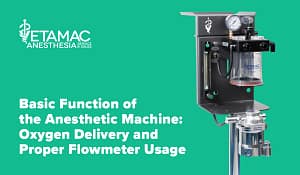
Vol. I: Basic Function of the Anesthetic Machine: Oxygen Delivery and Proper Flowmeter Usage
Learn the basics of anesthetic machines, including oxygen delivery, flowmeters, and proper usage for safe…

This issue of Vapors will begin a discussion about waste anesthetic gas (WAG) evacuation. There can be confusion regarding what this means and how it is accomplished. The effects of exposure to WAG and acceptable limits of exposure will be discussed in a future issue.
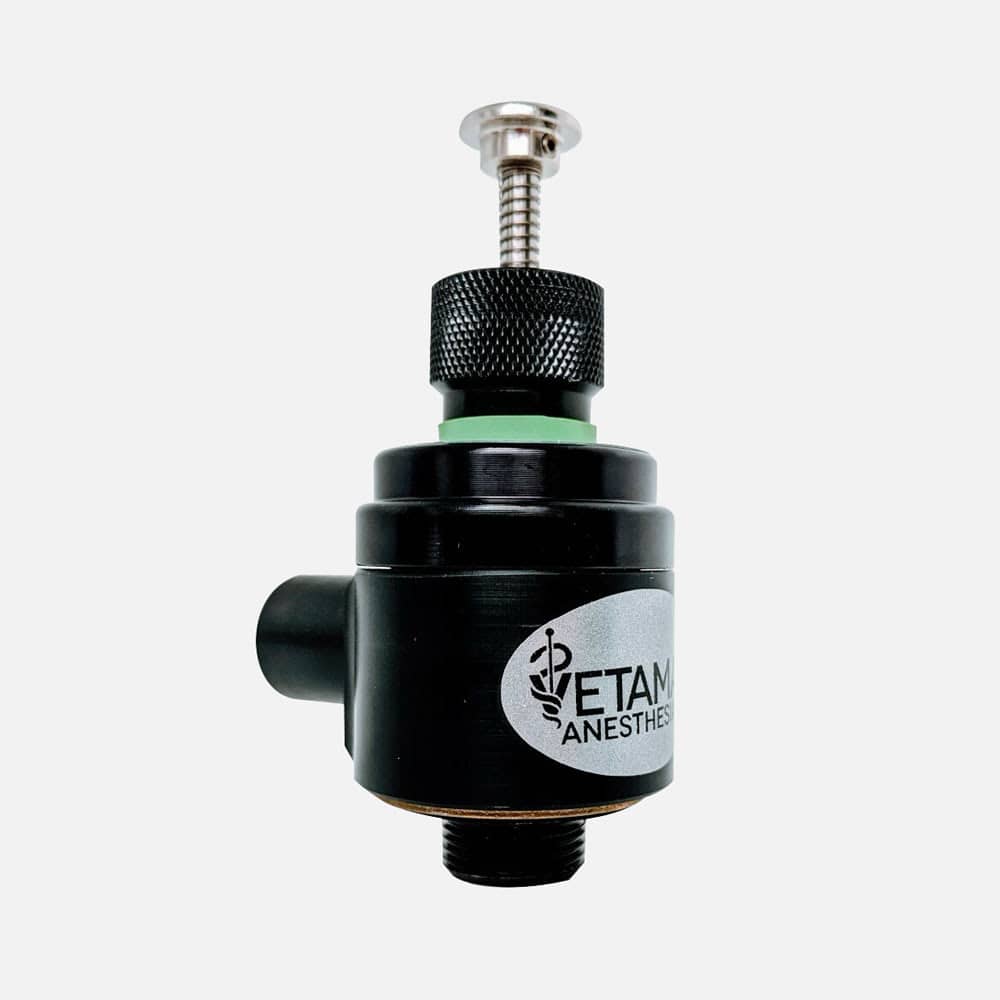
The pop-off valve on the anesthetic machine is the point at which WAG is captured for evacuation. A closed evacuation device is connected to the pop-off valve to conduct the WAG out of the work environment. All machines currently manufactured have a pop-off valve that will facilitate this connection. Some older machines do not have a valve to capture the WAG but can be retrofitted with an appropriate valve.
The exit port from the pop-off valve is a standard 19mm fitting. Some older pop-off valves have a 22mm fitting, so there is not yet uniformity in the size of the connection. The reason that the standard is now 19 mm, and not 22 mm, is to prevent the breathing circuit tubes (which are 22 mm) from being connected to the pop-off valve. And yes, this has happened.
There are two types of evacuation systems: passive and active. Regardless of which system is used, one point must be emphasized: the movement of gas out of the pop-off into the system must be passive. There should be no negative pressure applied to the breathing system. This prevents unwanted removal of gas from the anesthetic system.
There are two methods of evacuation when a passive system is utilized:
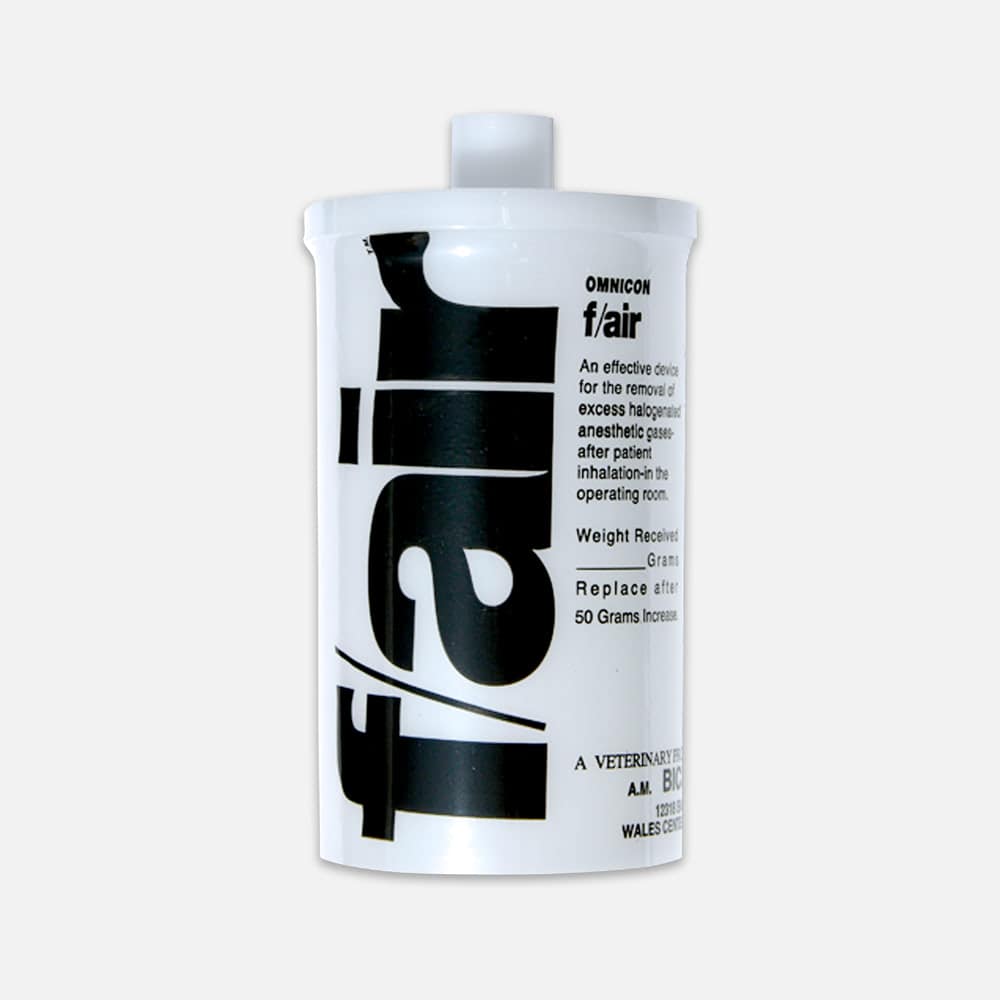
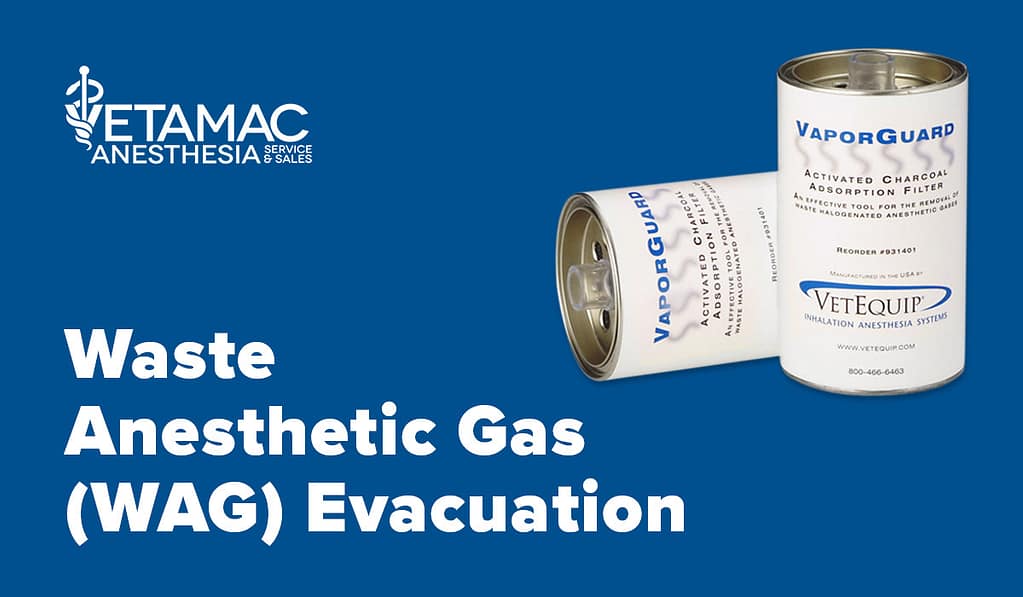
When activated charcoal canisters are used, the system must be monitored. This can be done by weighing the canister when it is new and then periodically weighing it until the recommended weight gain is achieved (usually 50 grams). There are charcoal canisters with an electronic monitor that sounds an alarm when it detects the first escape of gas through the canister.
Activated charcoal canisters are effective, but there may be occasional escape of WAG through the canister, especially at oxygen flow rates higher than 1 liter/minute. Emphasis must be placed on monitoring these canisters.
Another passive method of WAG evacuation is accomplished by connecting the pop-off valve to a closed system that allows the gas to move to the outside. This system is effective, but the gas conduction system of tubing and pipe must not be too long. The system should not exceed a distance of 25 feet. Excessive distances will increase the resistance to the movement of the gas and may actually cause back pressure on the system.
If the system goes through a wall to the outside, it is easy to limit the distance. However, if the gas is routed up to the ceiling and then conducted outside, this distance may be exceeded. The point of exit from the building should be pointing down and should be protected to prevent insects and debris from entering the system.
If there are multiple stations to which a machine(s) can be connected, there must be, at each station, either:
Passive WAG evacuation is effective, but active evacuation is preferred, especially when there are more than two stations to which the anesthesia machine is attached. The next issue of Vapors will discuss active evacuation systems.

New Products, Veterinary Specialist Articles