Vol. X: From Boredom to Panic: Elevating Anesthesia Safety Through Training
Improve veterinary anesthesia safety through proper training, protocols, and hands-on workshops to ensure skilled, confident…

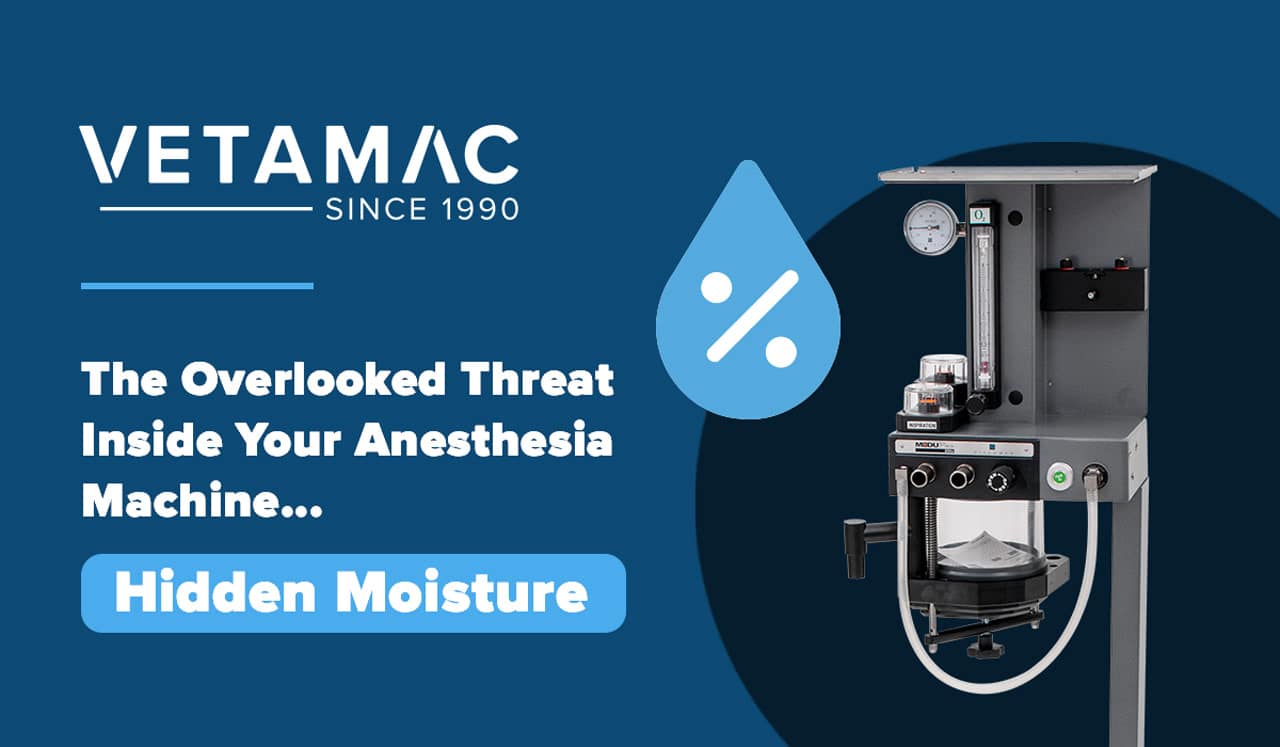
When the last patient of the day is recovering and the surgical suite is being reset for tomorrow, most of the attention goes to instruments and countertops. One area, however, is easy to overlook: the moisture that quietly builds up inside the anesthesia machine itself. It may look like a small detail, but it can shorten the lifespan of your equipment and, more importantly, affect the safety of every patient who breathes through that machine afterward.
Every anesthetized patient exhales water vapor with each breath. Case after case, that vapor works its way into the breathing circuit, the CO2 absorber, and the inspiratory and expiratory valves. Without a chance to fully dry out, the moisture does not evaporate on its own. Instead, it lingers in the corners and crevices of the machine.
Left unaddressed, this trapped moisture creates several real problems. Valve discs start to stick, interfering with normal function. Moisture also draws in dust and pet hair, which adhere to damp surfaces and gradually clog the machine’s internal components. Mold can even take hold inside the absorber’s internal pathways. Each of these issues chips away at the reliability of your equipment and the quality of anesthesia your patients receive.
Soda lime is affected as well. The granules are engineered to perform within a specific humidity range, and when the canister sits closed overnight in a moisture-saturated environment, that range is exceeded. The granules clump together, the absorbent exhausts faster than expected, and your clinic faces more frequent replacements, along with the risk that reduced absorption capacity goes unnoticed until it matters most, in the middle of a procedure.
The reassuring part is that this issue is entirely preventable. Vetamac recommends building a short drying routine into the end of every surgical day.
Here is the process to follow:
Many referral hospitals already follow this same end-of-day drying practice, with strong results. Performed consistently, this few-minute routine meaningfully lowers the risk of stuck valve discs, unexpected blockages, and preventable breakdowns, while extending the service life of your equipment and reducing how often it needs to go into the shop.
A properly dried anesthesia machine means a more dependable device, steadier surgical days, and a technical team that spends less time on repairs that were entirely avoidable.



Veterinary Specialist Articles