Vol. II: The Anesthetic Machine as an Intermittent Dosing Device – Part II
Learn how MAC, vapor pressure, and rebreathing circuit dynamics affect the anesthetic machine as an…

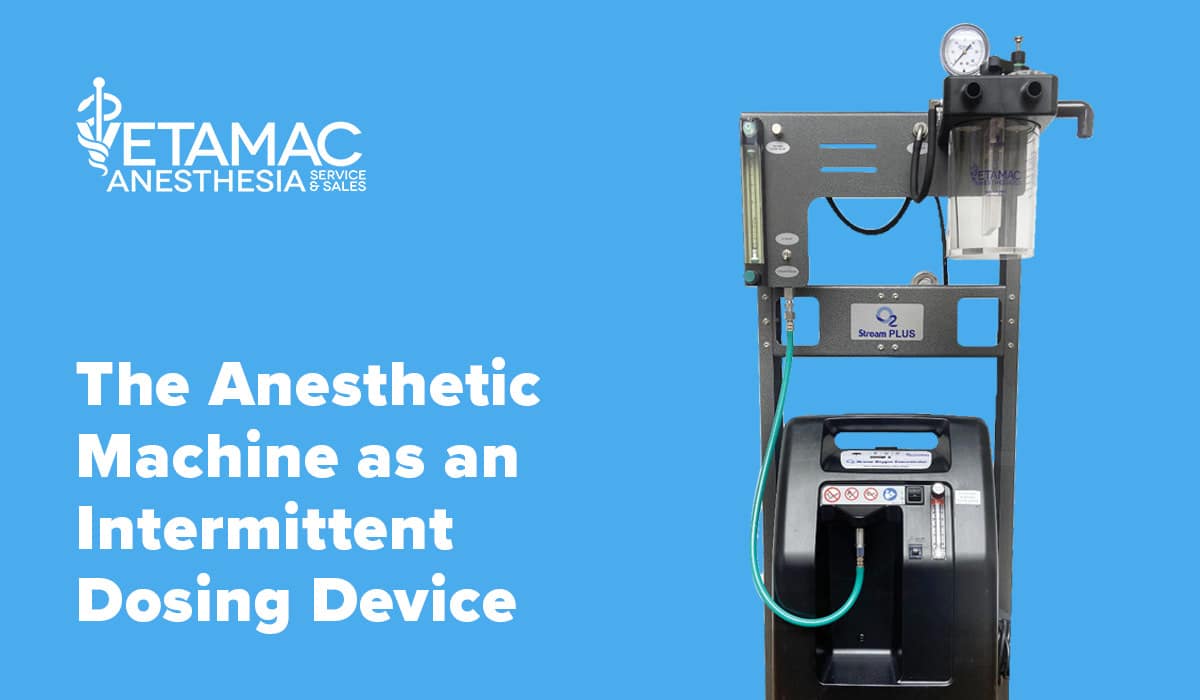
An understanding of the basic functions of the anesthetic machine will not necessarily equip the anesthetist to perform anesthesia at an optimum level. It is also necessary to acquire a knowledge of the relationship between the characteristics of the anesthetic machine, and the pharmacokinetics of inhalant anesthetic agents. This article will present the basic pharmacokinetics of agents, how the agents are transferred, and how the characteristics of the anesthetic machine affect pharmacokinetics.
Pharmacokinetics describes how the uptake, distribution, and elimination of a drug occurs. A simple acronym will help remember this description: DUDE – Drug Uptake, Distribution, and Elimination. Since the inhalant agents used today are eliminated by the lungs in the same form as they are administered, the anesthetist can control, to a great extent, the uptake and elimination of these agents because they are both controlled by the inspired concentration of the anesthetic being delivered.
For inhaled agents to achieve the desired effect, they must be changed from the liquid phase to the gas phase, then delivered to the brain. There are three “carrier systems” involved in this process:
Since gases diffuse down a pressure gradient, all concentrations (partial pressures) in the system and the patient are controlled by the fresh gas flow into the breathing circuit. If the desired effect is to induce and maintain anesthesia, the concentration of the fresh gas must remain high enough to achieve this effect. However, if recovery is desired, then the concentration of the fresh gas flow must be low enough to achieve that effect.
Once the fresh gas flow has delivered the anesthetic to the breathing system reservoir, patient ventilation moves the gas from the system into the lungs. Alveolar ventilation is essential to achieving an alveolar concentration that will produce the desired plane of anesthesia.
Minute Alveolar Ventilation (MAV) is not the same as Minute Ventilation (MV) because the anatomic and mechanical dead space must be moved with each breath. Therefore, MAV is MV minus (dead space x breaths per minute). Sometimes patients are “bagged” during induction because spontaneous ventilation is not sufficient and it is necessary to increase MAV.
It should be noted at this point that the anesthetic is moved from the alveoli to the blood by simple diffusion down a concentration gradient. Therefore, alveolar concentration must be higher than the concentration in the blood if uptake is to occur. Once the anesthetic is moved into the blood, it is carried to the brain (and all other organ systems) by the flow of blood (cardiac output). The effect of blood flow and the blood-gas solubility coefficient of the specific agent on uptake, distribution, and elimination will be discussed later.
As in the lungs, the anesthetic moves from the blood to the brain by simple diffusion down a concentration gradient. If the concentration is higher in the blood, movement is into the brain, and vice versa.
Blood/Gas (B/G) solubility and minimum alveolar concentration (MAC) are physical characteristics of inhalant agents that affect DUDE. The Blood/Gas solubility coefficient describes the amount of anesthetic agent that is dissolved in the blood.
It is evident that induction (and recovery) will be slower with Agent A. The B/G solubility coefficient for isoflurane is 1.46 and for sevoflurane is 0.68, therefore sevoflurane has a quicker induction and recovery.
The next newsletter will begin with a discussion of minimum alveolar concentration (MAC) and conclude with how the characteristics of the machine affect DUDE.
Veterinary Specialist Articles