Vol. X: Debunking Vaporizer Myths
Explore expert Q&A on WAG systems, safety, and best practices in veterinary anesthesia. Learn more…

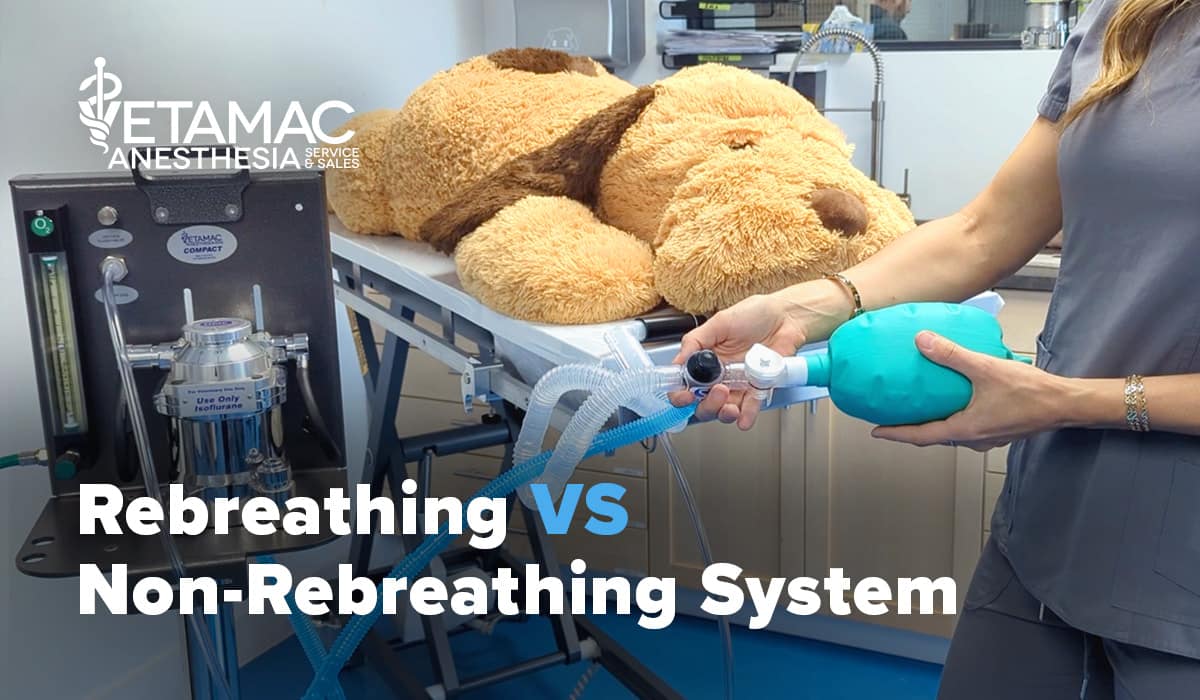
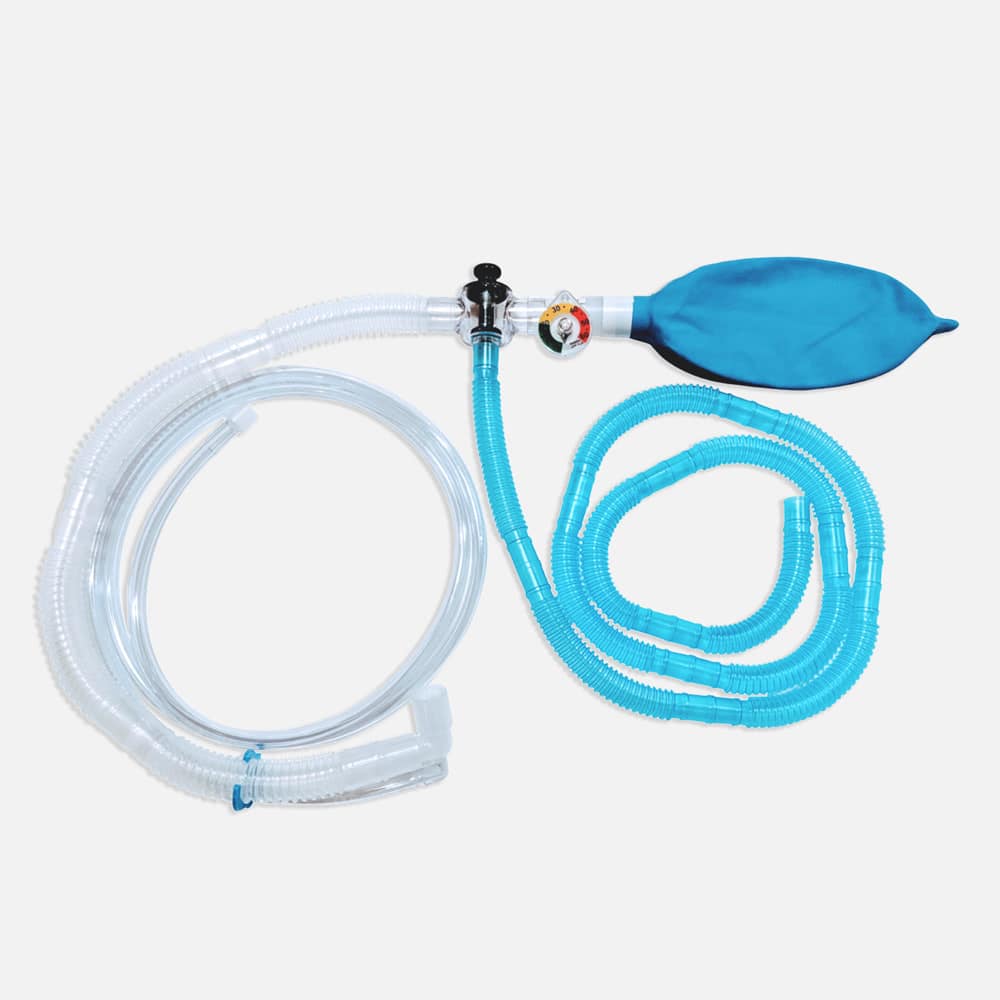
It is important to know how these systems differ both in form and function. The non-rebreathing system is most often used on small patients that weigh less than 10 lbs. Although some practices do not use a non-rebreathing (NRB) system regardless of the size of the patient, there are definite advantages to the NRB system.
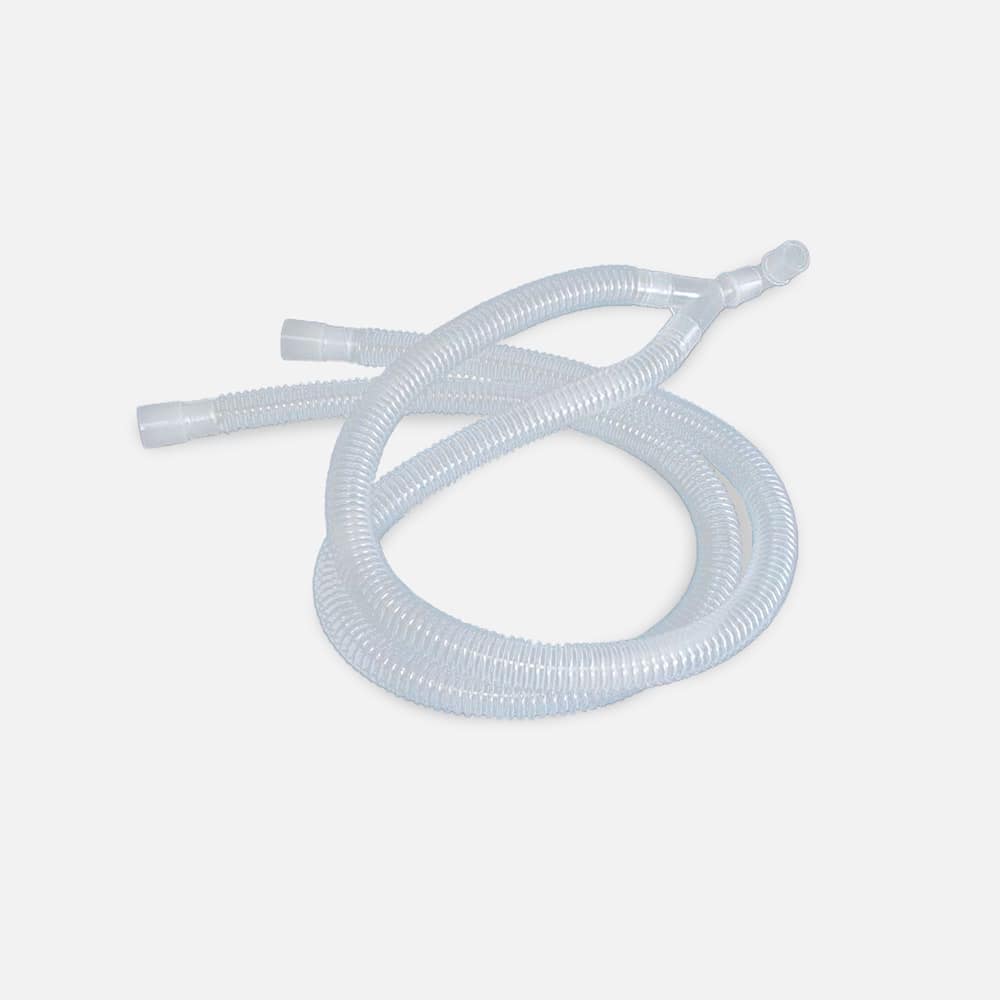
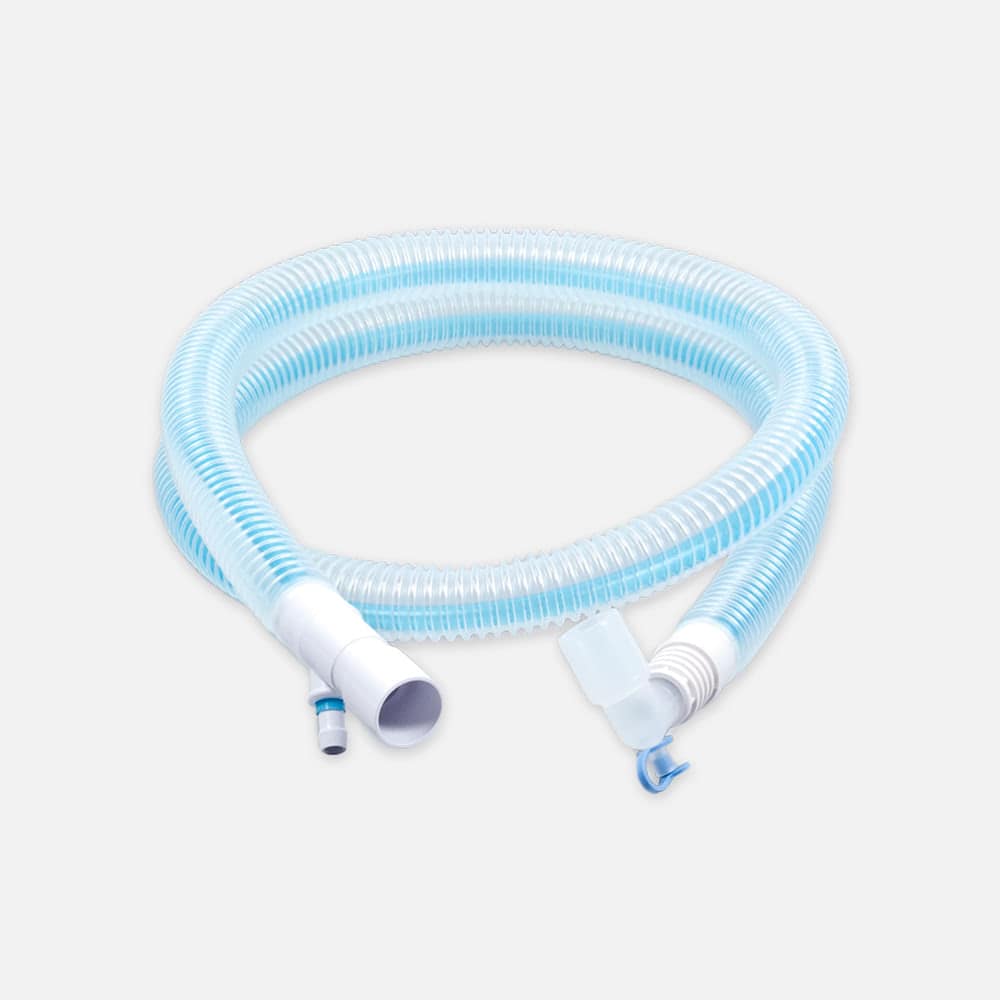
The flow of the gas in a rebreathing system is always one way – toward the patient during inspiration and away from the patient during expiration. This is true regardless of the type of tubes – Y-tube or Universal F tube. However, the universal style does not function as a non-rebreathing system. The use of a rebreathing system requires the patient to open the one-way valves. Although the resistance to opening the valves is small, the patient must still overcome this resistance.
In the non-rebreathing (NRB) system, the flow of gas is to and fro, and there is no resistance to flow. However, since the expired gas is introduced into the same space from which it was inspired, the fresh gas flow into the system must move the expired gas far enough away from the patient so that the next inspiration does not contain any of the expired gas from the previous breath. This requires a higher fresh gas flow than when a rebreathing system is used.

The higher flow rates used in the NRB make is less economical than the rebreathing system. However, since each inspiration contains only fresh gas, the depth of anesthesia can be controlled easier than with a rebreathing system. If the vaporizer setting is changed, the patient receives the changed concentration immediately. With a rebreathing system it will take 5-15 minutes (depending on the flow rate) for the patient to receive the changed concentration since the expired gas is being mixed with the gas in the bag.
The flow rate for the non-rebreathing system is published at 100-300ml/kg per minute*. The lower end of the range is for a Bain type NRB and the higher end is for the T-piece type NRB. Ten to fifteen pounds and under is frequently the weight at which a NRB system is used.
*Lumb & Jones’ Veterinary Anesthesia, Third Edition, p. 396
Unless there is a reason to think that a patient has been infectious, washing the tubes with mild soap and water, rinsing them, and then hanging them to dry is sufficient. If a disinfectant is used, the tubes must be profusely rinsed with water or airway irritation may occur.