
Veterinary Specialist Articles
My new favorite ventilator: the Moduflex InsPurr
Discover Dr. Reed’s perspective on the Moduflex insPurr ventilator and its benefits for safety and…

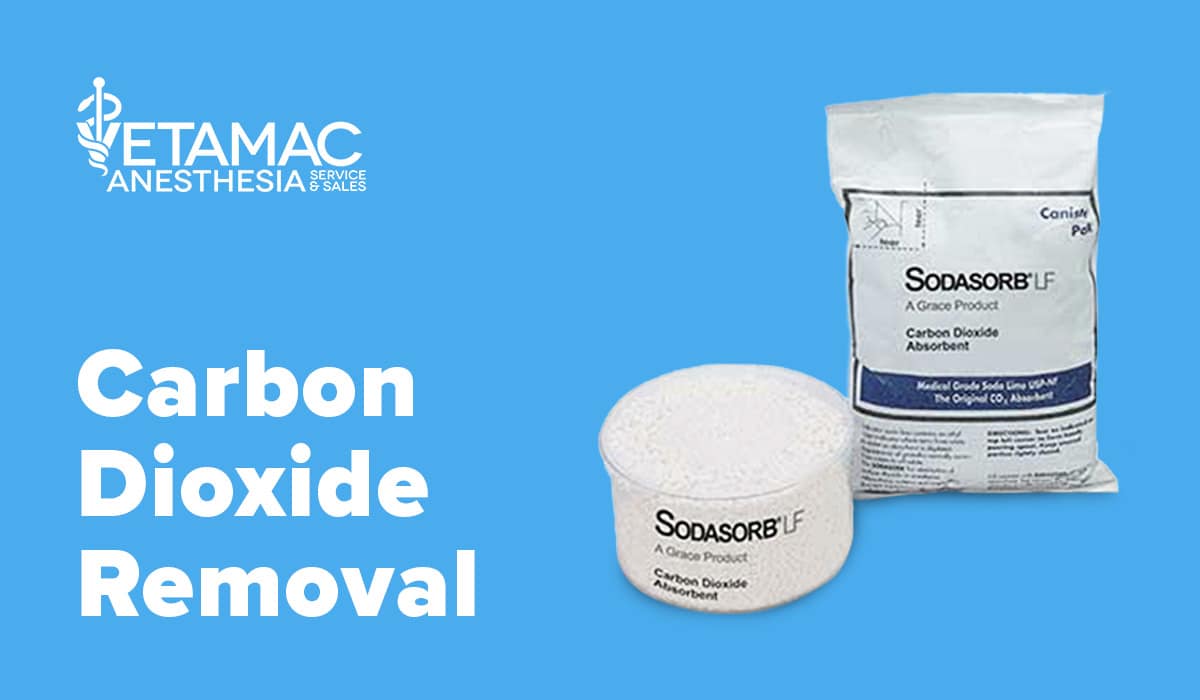
Failure to remove exhaled carbon dioxide from the breathing circuit results in increased carbon dioxide in the blood. This produces a respiratory acidosis as well as an increase in respiratory rate. Both conditions are detrimental to a successful anesthetic procedure.
This issue will discuss the chemical absorption of carbon dioxide in the rebreathing anesthetic circuit. The process relies on the principle of a base neutralizing an acid. Expired carbon dioxide reacts with water to form carbonic acid, which is neutralized by the alkaline chemicals in the absorbent. The reaction produces water and a carbonate as end products.
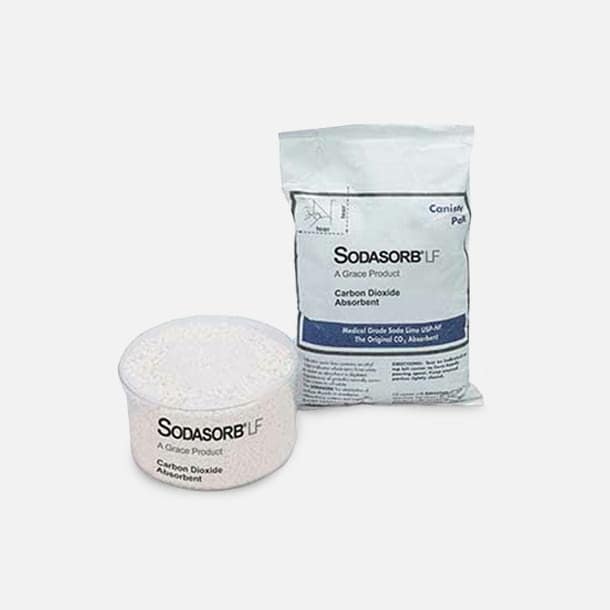
The most common absorbent used is soda lime. By weight, it consists of 4% sodium hydroxide, 14-19% water, and enough calcium hydroxide to make up the balance. A small amount of pH-sensitive dye is also added. As the absorbent reacts with carbon dioxide, the color changes to purple, signaling that the absorbent has been exhausted.
The water in the absorbent is present as a thin film on the granule surface, and this water is necessary for the chemical reaction between the carbon dioxide and the absorbent. High moisture absorbents (14-19%) have a slower rate of absorption and do not exhaust as rapidly as low moisture absorbents. The humidity of the breathed gases does not affect the capacity of soda lime to absorb carbon dioxide.
The absorption of carbon dioxide takes place by the following chemical reactions:
This chemical reaction is exothermic meaning that heat is released as the reaction takes place. This heat can be detected on the outside of the canister. If heat is not present this may mean that absorption is not taking place. The amount of carbon dioxide absorption is about 26 liters/100 grams of absorbent. Efficiency may vary depending on the design of the canister and the method of packing.3 If the absorbent is working properly there should be a negligible amount of carbon dioxide being rebreathed by the patient.
The next issue will discuss different situations that may compromise the efficiency of the absorbent.
It is possible that if the oxygen flow rate is high enough and the pop-off valve is located close to the expiratory one way valve, that some of the carbon dioxide is being removed through the pop-off valve instead of the absorbent.
Veterinary Specialist Articles