Veterinary Specialist Articles
TPLO Surgery for Dogs: Success Rates and Alternative Options
Explore TPLO surgery for CCL rupture in dogs: indications, surgical techniques, success rates, and alternatives…

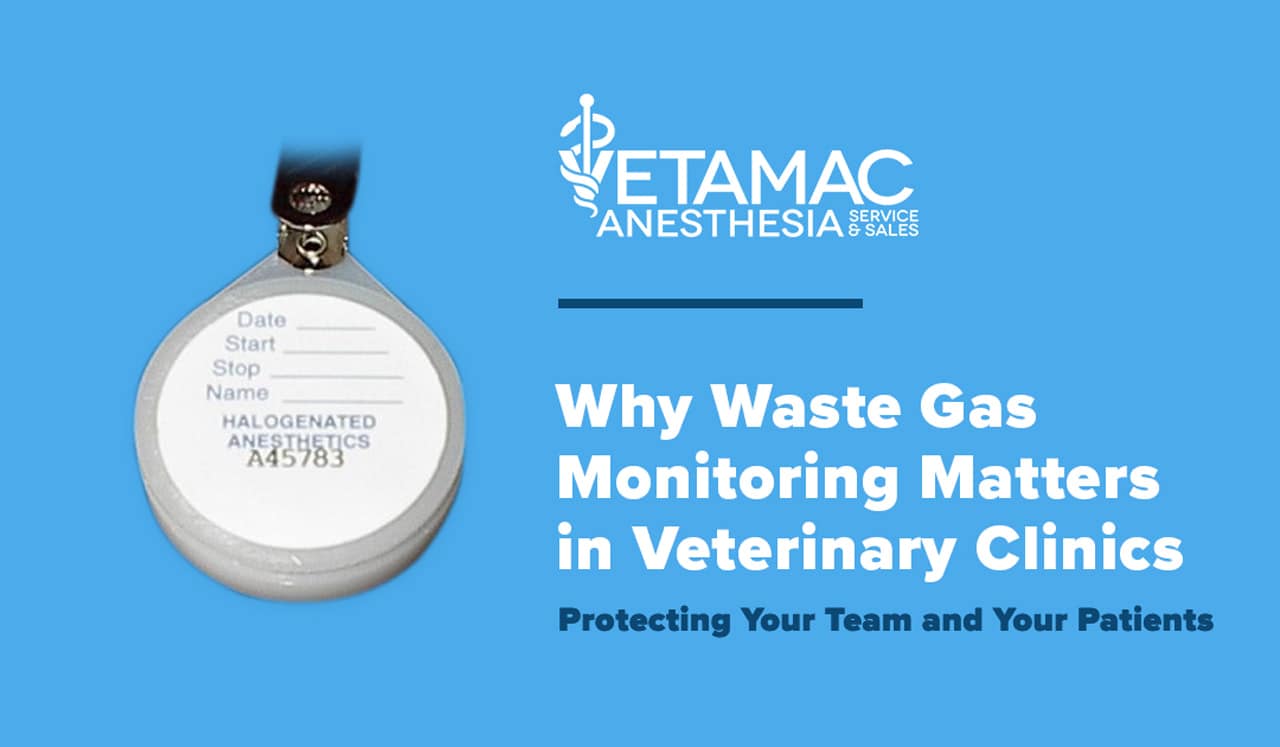
Veterinary professionals dedicate their careers to caring for patients, but the clinic environment can also present hidden risks to the healthcare team. One of the most significant – and often overlooked – risks is chronic exposure to anesthetic waste gases. With anesthesia in daily use for everything from routine spays to complex surgeries, ensuring your team’s safety requires more than just proper scavenging systems. It requires ongoing monitoring.
That’s where the Vetamac Waste Gas Monitoring Badge comes in. Simple, effective, and backed by trusted testing protocols, it’s an essential tool to protect your staff and document your clinic’s compliance.
When anesthetic gases like isoflurane or sevoflurane escape into the air, they create an occupational hazard. Even with properly maintained anesthesia machines, leaks can occur at the breathing circuit, vaporizer, scavenging system, or during mask/induction chamber use.
Health concerns from long-term exposure include:
Veterinary clinics are particularly vulnerable because surgical suites are often compact, ventilation may not be ideal, and anesthetic use is frequent.
Regulatory bodies have established limits for exposure to waste anesthetic gases:
Monitoring ensures your clinic is operating well below these thresholds – protecting your team and demonstrating compliance.
Even if your anesthesia machine passes preventive maintenance and your scavenging system works properly, you can’t “see” or “smell” if gases are escaping at unsafe levels. Periodic monitoring is critical because:
The badge provides an easy, reliable way to measure exposure, whether at the personal or room level:
This process provides clear, objective data on anesthetic gas levels in your environment.

Incorporating waste gas monitoring into your clinic’s safety protocols demonstrates leadership and commitment to your team’s health. Consider these best practices:
Annual or semi-annual monitoring: Establish a regular testing schedule to catch issues early.
Monitor both staff and rooms: Capture both individual exposure and environmental concentrations.
Document results: Keep results with your OSHA compliance and safety records.
Follow up with maintenance: If results are high, schedule immediate equipment servicing.
Educate your team: Review results with staff so they understand risks and how monitoring protects them.
At Vetamac, we’re not only your anesthesia equipment partner – we’re your safety partner. Our Waste Gas Monitoring Badge provides:
Fast, reliable results within 48 hours.
Simple process – no complex equipment or training required.
Peace of mind knowing your staff is protected and your clinic is compliant.
Direct support from our team if results require follow-up.
By integrating periodic monitoring, your clinic reduces risk, increases team satisfaction, and safeguards the wellbeing of both staff and patients.
Take the proactive step to ensure your clinic’s safety. Order your Vetamac Waste Gas Monitoring Badge today or call us at (800) 334-1583.
Protect your team. Protect your patients. Protect your practice.
For more information on waste anesthetic gas (WAG) safety and exposure standards, consult the following authoritative resources:
Taking the time to familiarize yourself with these standards helps ensure that your clinic’s safety protocols meet the latest professional and regulatory recommendations.

Veterinary Specialist Articles