Did You Know Your Oxygen Costs? Discover How Much You Could Save!
Discover how much you could save on oxygen costs with our insightful guide. Uncover potential…

Most discussions about monitoring relate to patient monitoring. However, monitoring the machine can prevent problems that might ultimately have consequences for the patient. This issue of Vapors will discuss some of the procedures and devices used to monitor the anesthetic machine.
There are three primary areas of concern that need to be addressed. The first relates to the oxygen supply concentration and pressure, which will be discussed in this issue. Next is excess pressure in the breathing system and finally, a rise in inspired CO2. These will be discussed in Part II.
Although most practices use O2 that is provided in high pressure tanks (2000 psi), there is considerable interest in the use of O2 that has been produced by separating it from room air through the use of a molecular sieve. These devices are called O2 concentrators or O2 generators.
The concentrators are usually devices that are used for home O2 delivery that are adapted for use with anesthesia. The generators are devices that have been designed to produce a higher volume and pressure of O2. These devices do not produce 99.9% USP O2 but deliver concentrations of 89% – 96%.
A generator with a sufficient capacity should be considered for veterinary practice. The capacity can be calculated by using the following guidelines:
The calculated capacity should be approximately 60% of the total capacity of the generator (see Table).
| Machine | Liters/minutes |
|---|---|
| 2 Anesthetic Machines | 3 liters/minute |
| 1 Oxygen Cage | 5 liters/minute |
| 1 Ventilator (50 psi) | 6 liters/minute |
| Total Required | 14 liters/minute |
60% of Capacity is 14 liters/minute
Capacity of Generator = 23 liters/minute
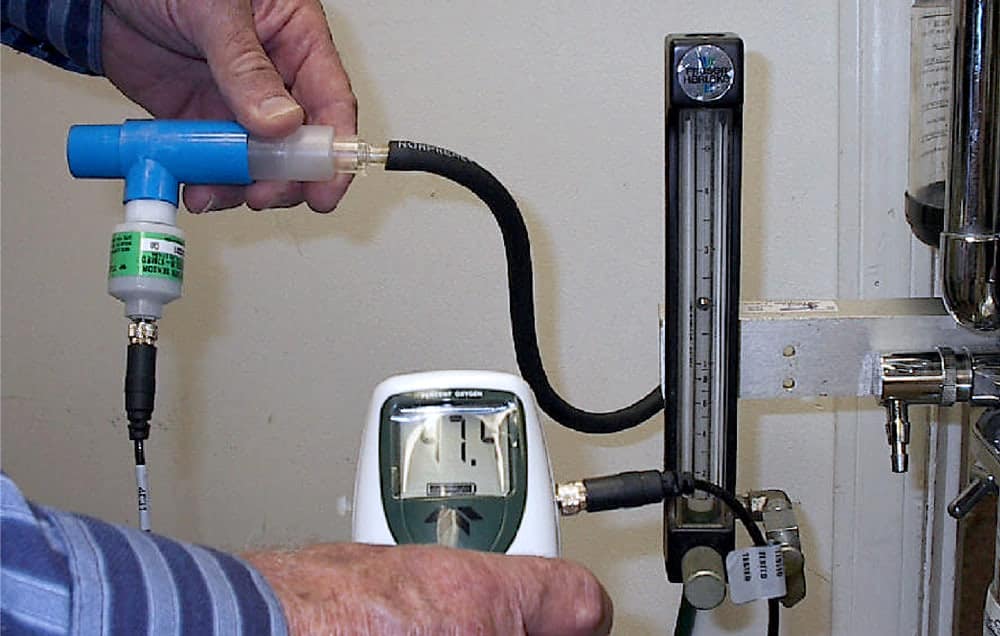
There are conditions that affect the integrity of the molecular sieve and the concentration of O2, therefore the concentration delivered to the machine should be checked periodically. Using the device at or near peak flow rates can actually damage the molecular sieve and reduce the concentration of O2 produced. With some units, high ambient temperatures can also reduce the concentration. Occasionally there can be a leak in the system as a result of a loose connection at the generator or the machine. This causes increased demand on the generator and may also entrain room air into the O2 flow especially in units that deliver 5 psi or less. The concentration can be verified using an O2 sensor connected to the O2 flow on the anesthetic machine (see Figure 1). These sensors usually require a flow rate of 1-2 liters/minute. If the anesthetic machine is serviced on a regular basis, checking the O2 concentration from the generator should be standard protocol. Maintenance of O2 generators is usually simple and easy and can be performed by someone in the practice. If these procedures are followed according to the manufacturer’s guidelines, most units will provide excellent service.
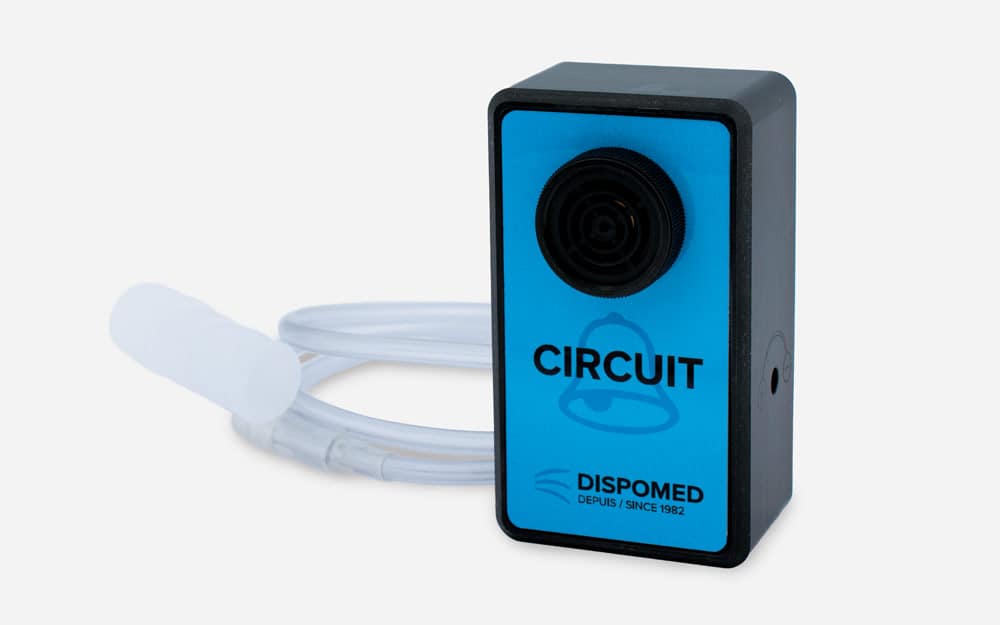
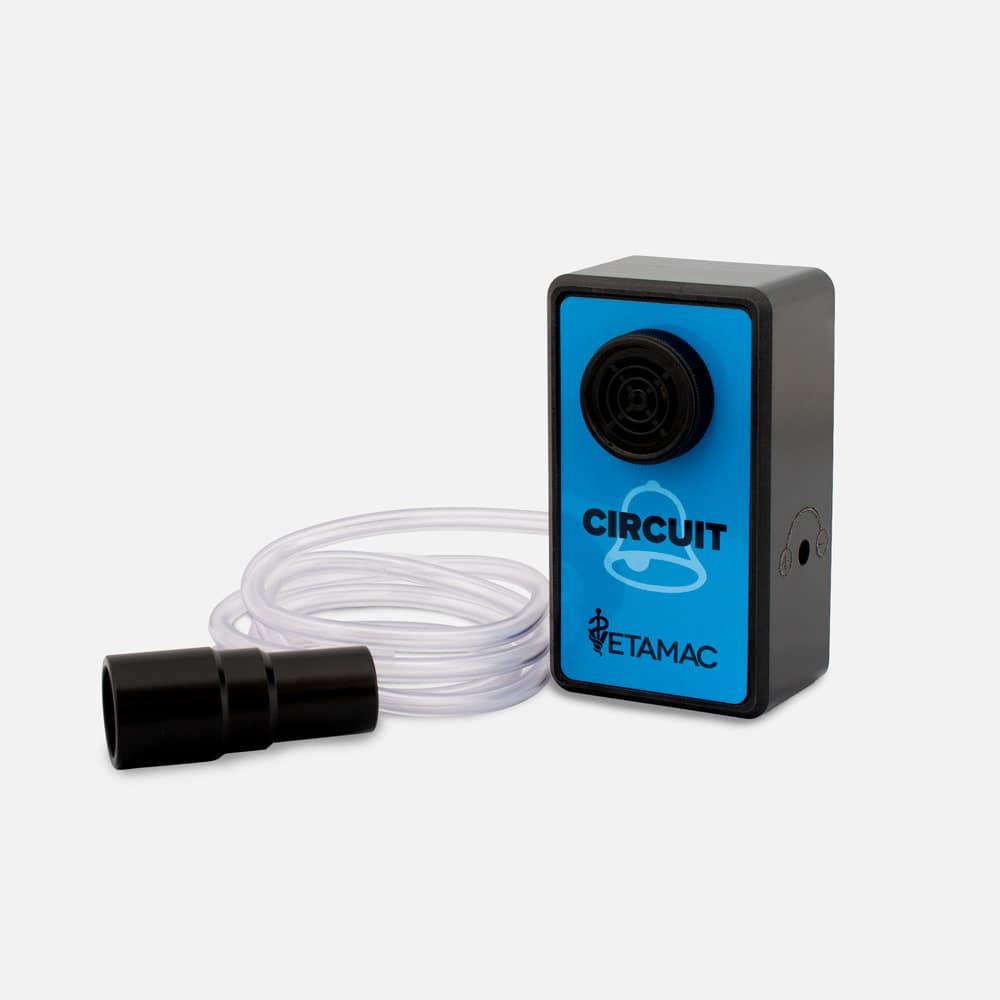
The primary issue with using high pressure oxygen (2000 psi), is knowing when the tank is empty. This problem exists when the tank is located in a remote area and there is no gauge or alarm in the work area. Some machines can accomodate an E-size (small) tank which can be used as a backup to a large tank. For most practices, the easiest way to monitor the O2 delivery, is to install a low pressure alarm on the machine (see Figure 2). This alarm will sound when the line pressure drops below 30-40 psi. Since the piping system will hold several liters of O2, this will allow time to switch to a full tank.
Since O2 flow is necessary for both life and the delivery of anesthetic, the importance of monitoring the O2 to the machine is evident.


Veterinary Specialist Articles