Protecting Health and Environment: Vetamac’s Gaseous Waste Safety
Discover the hazards of waste anesthetic gases in veterinary practices and how Vetamac provides solutions…

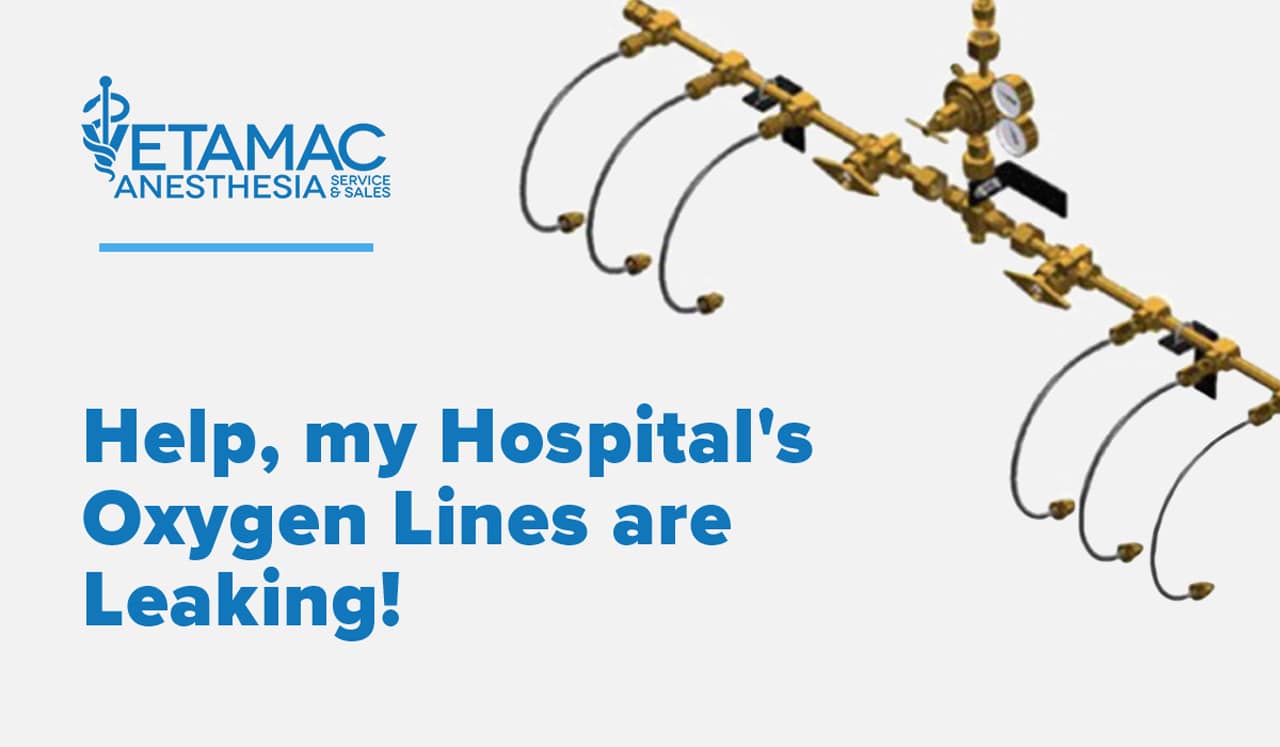
It can be quite alarming to turn your oxygen tanks on in the morning and hear a hissing sound in the oxygen lines. Or you leave your tanks on overnight and come in the next morning to find your tanks are empty. Let’s start from the beginning. All high-pressured oxygen cylinders must have the pressure regulated. Hospitals can be supplied by oxygen in many ways. Here is the breakdown:
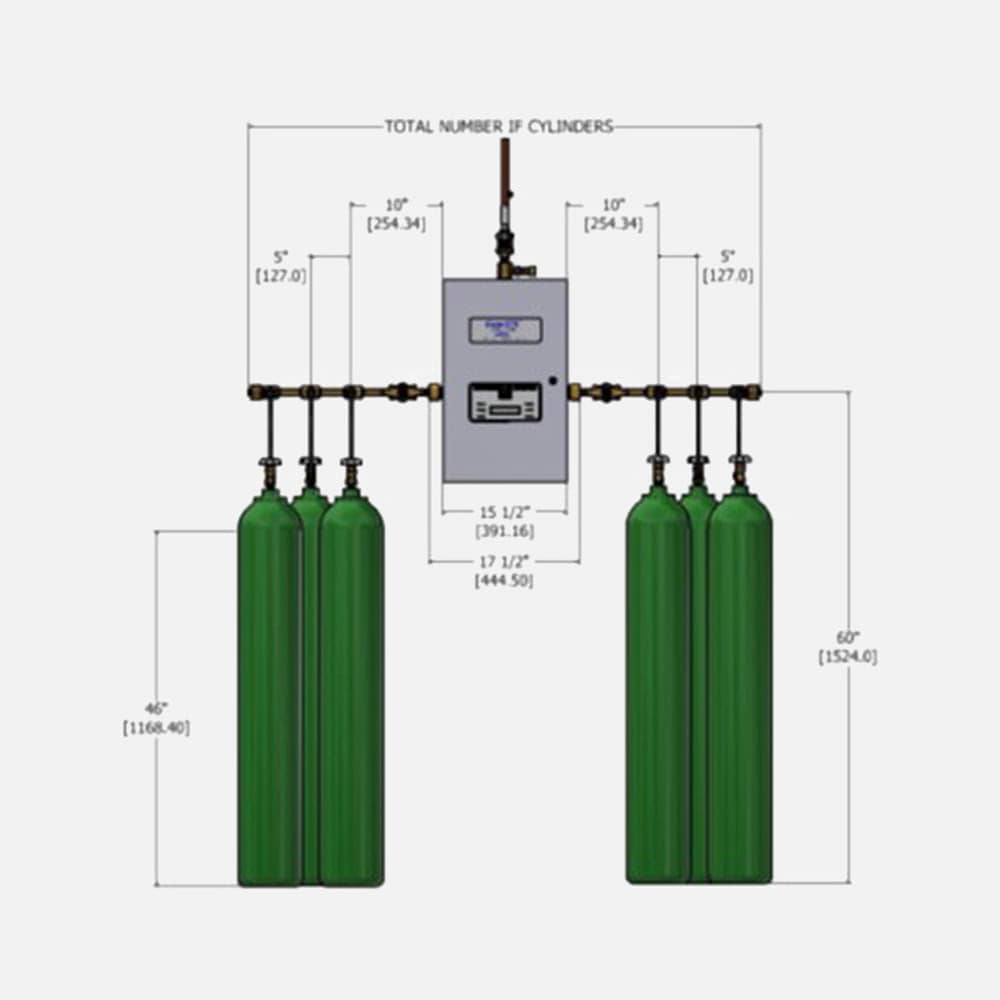
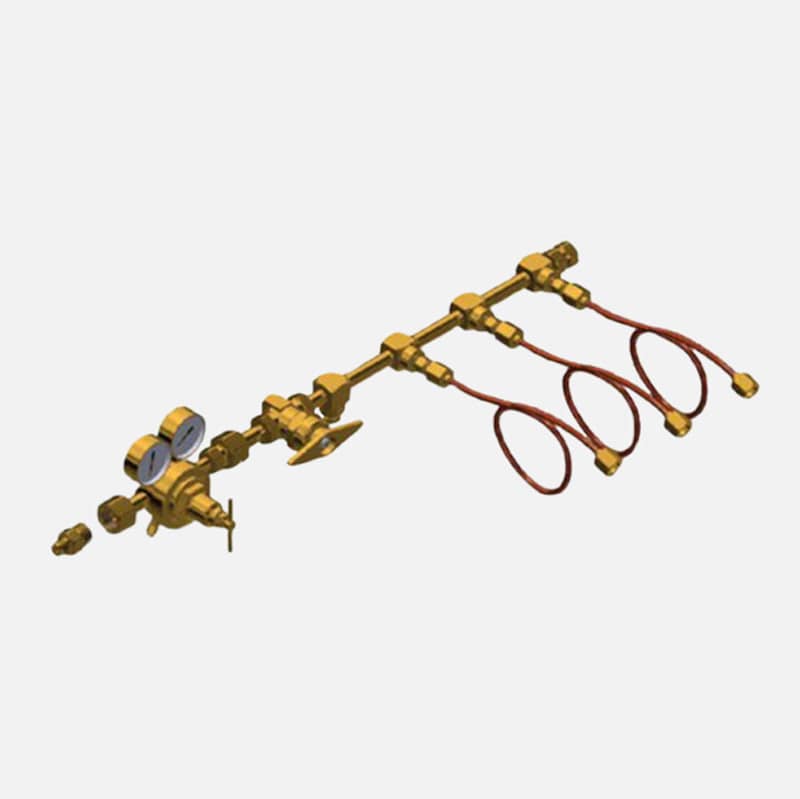
Manifold system from liquid oxygen dewars or H tanks. The manifold regulates the pressure coming out of the H tanks (2200 PSI) or the liquid dewars (235 or 350 PSI) to between 50 and 60 PSI to supply copper lines running through the hospital. The manifolds can be automatic or manual.
This is a regulator connected to the H tank lowering the tank pressure
from 2200 PSI to between 50 and 60 PSI. Some H tank regulators are factory set and cannot be altered. Some H tank regulators can be adjusted. It is recommended never to run the PSI higher than 65 PSI. Higher pressure can damage anesthesia and oxygen therapy equipment.
These are commonly a single or double yoke on the anesthesia machine post that supply oxygen to the machine. E tank regulators decrease the tank pressure from 2200 PSI to between 50 and 60 PSI.
These are a newer item but are becoming more commonly used in veterinary medicine as the technology improves. Pressures can range anywhere from 5 PSI to 70 PSI depending on the unit. Smaller units can supply one anesthesia machine or larger units can supply an entire specialty hospital.
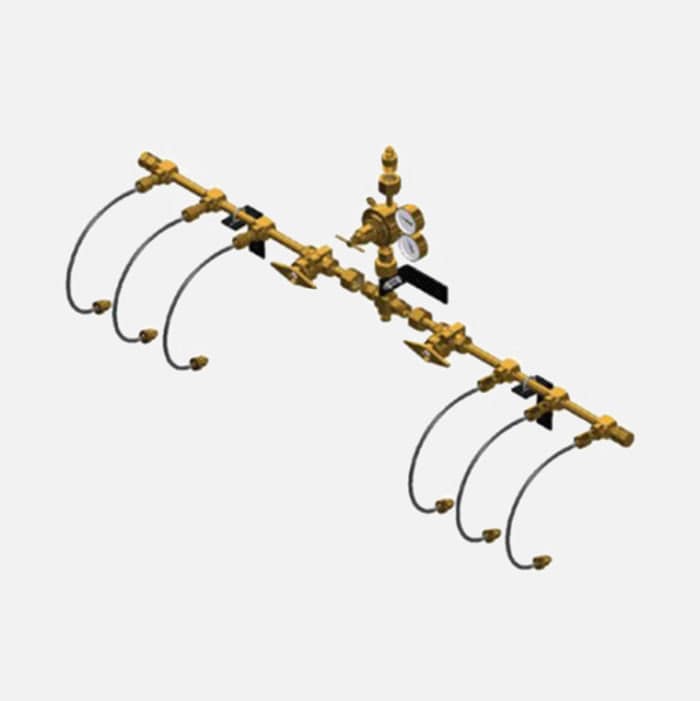
Manifold System
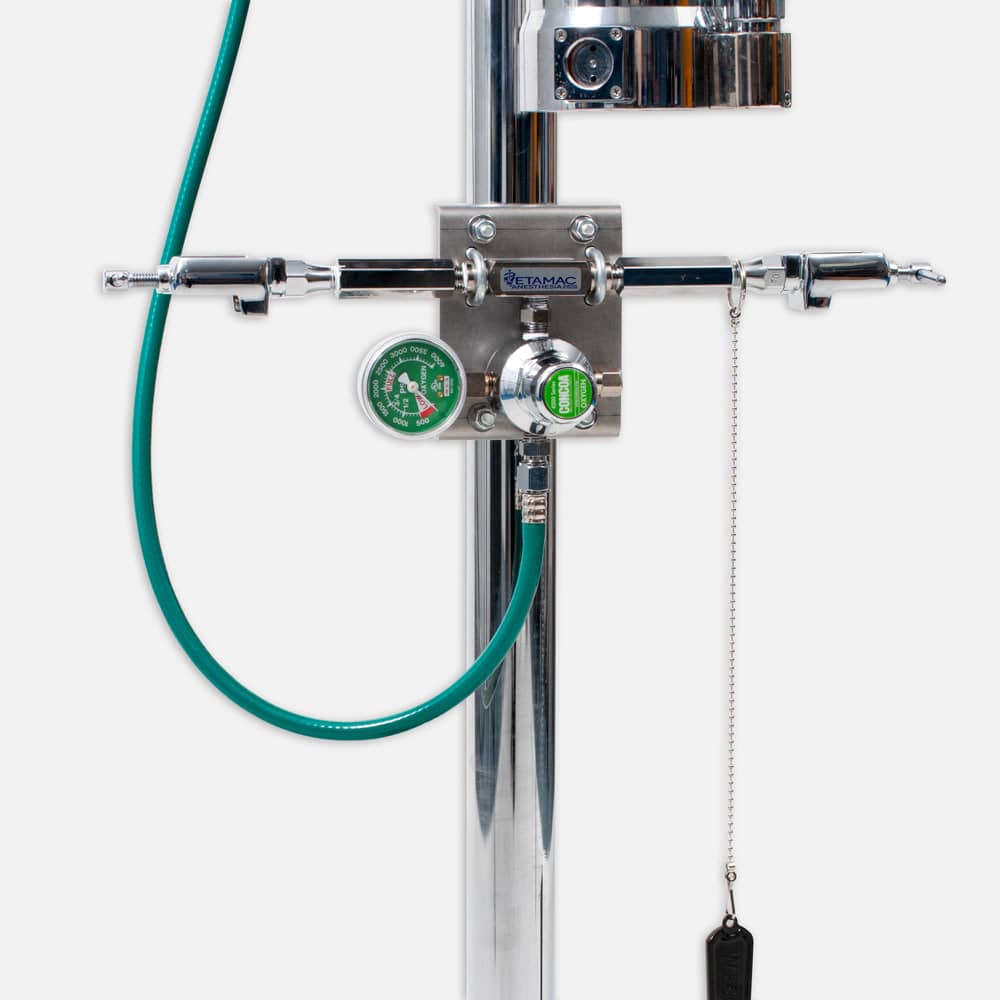
E-Tank Yoke / Bracket
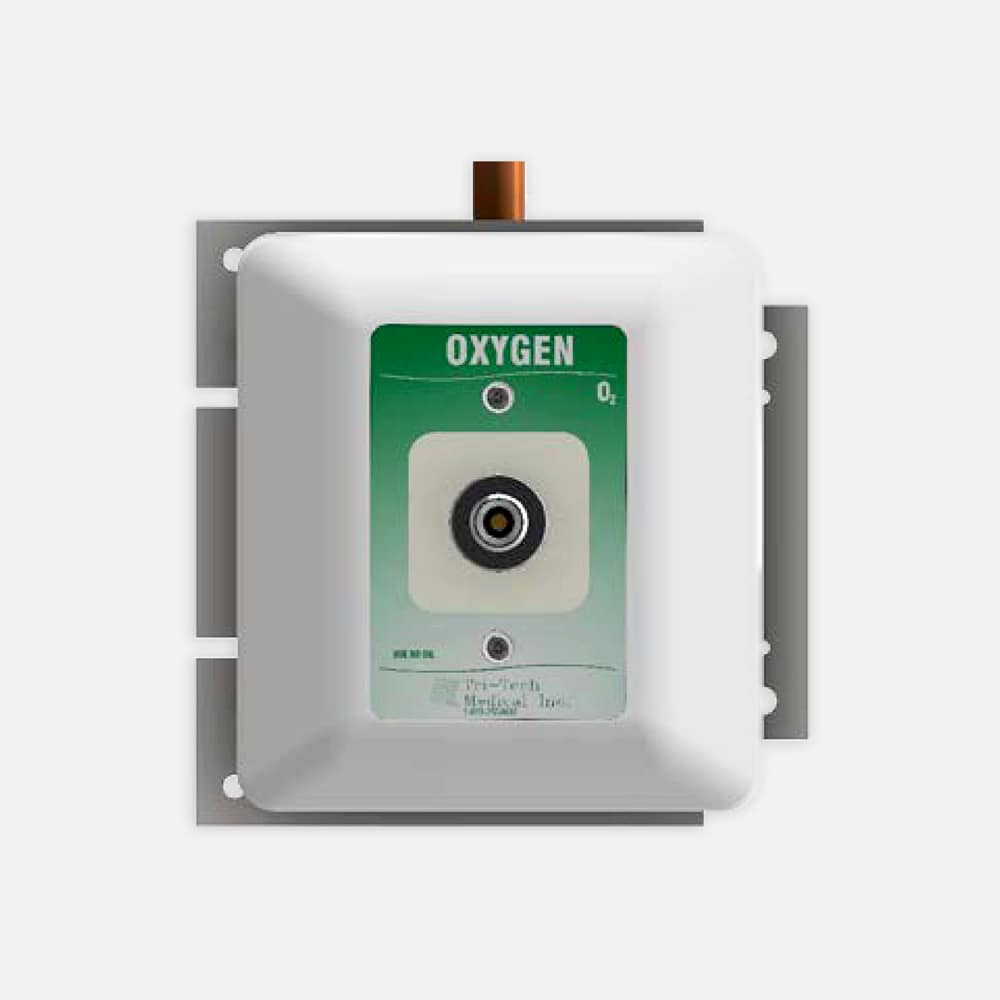
Oxygen Outlets
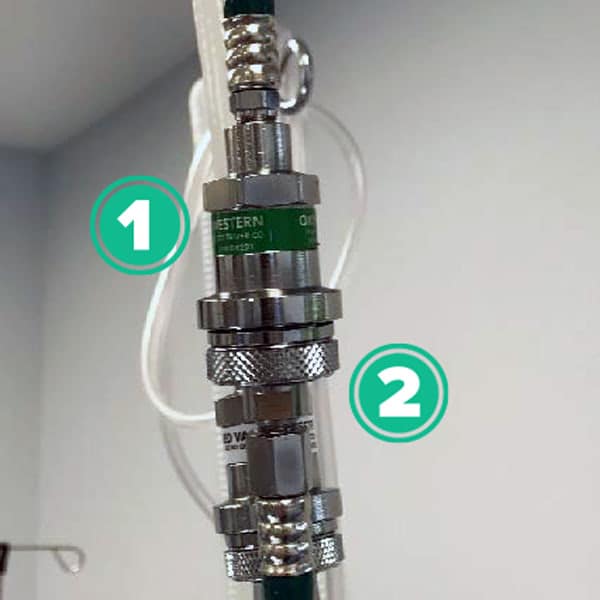
Quick Connects
These transfer oxygen from the copper oxygen lines to flexible green hoses that connect to anesthesia and oxygen carrying equipment.
They come in a variety of types and sizes. These are on the end of flexible green oxygen hoses and allow for easy connections between oxygen supply stations throughout the hospital. If you have an oxygen leak it can come from any of the above including your anesthesia machines and oxygen therapy equipment. Oxygen leaks can be small or large depending on the type of leak. If the leak is found in the copper piping a medical gas certified plumber must resolve the leak.
Vetamac is a distributor of Tri-Tech Manifold Systems. Vetamac also carries all types of oxygen supply systems including hard to find oxygen quick connections, faceplates and rough boxes. Our service technicians are trained to isolate oxygen leaks and repair or replace equipment. Please contact Vetamac today to solve your oxygen leak.