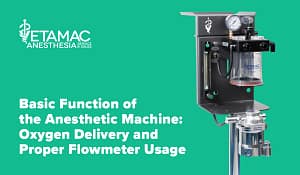
Vol. I: Basic Function of the Anesthetic Machine: Oxygen Delivery and Proper Flowmeter Usage
Learn the basics of anesthetic machines, including oxygen delivery, flowmeters, and proper usage for safe…

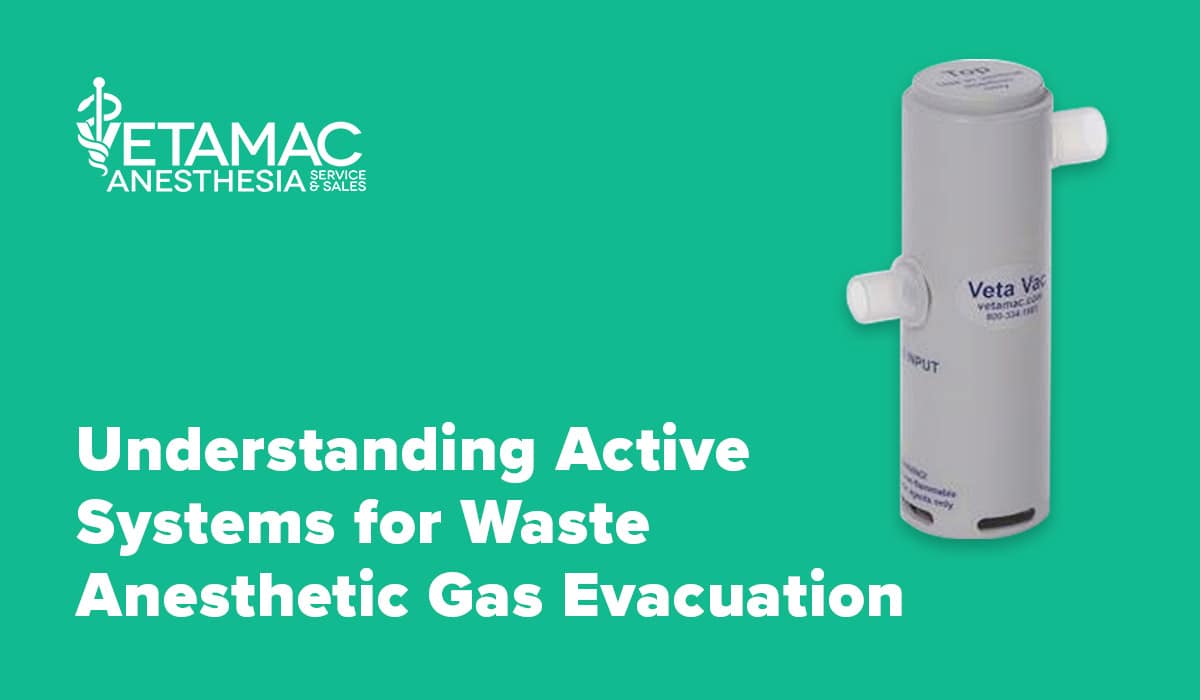
The previous issue of Vapors explained the two methods of waste anesthetic gas (WAG) evacuation using a passive system. This issue of Vapors will discuss the two types of active systems. We will refer to the first as a vacuum system since this system creates a vacuum to remove the gas. The second system creates a flow therefore we will refer to this as a flow system. Both systems are very effective but the vacuum system is more expensive to install.
In a rebreathing system, a portion of the oxygen delivered is rebreathed by the patient. This rebreathing of a portion of the expired gas is possible because the system has uni-directional or one-way valves and provides for the removal of expired CO2. This prevents the rebreathing of O2 9and anesthetic) before CO2 is removed. It is possible (but not likely) that one specific atom of oxygen introduced could remain in the system for the duration of the procedure.
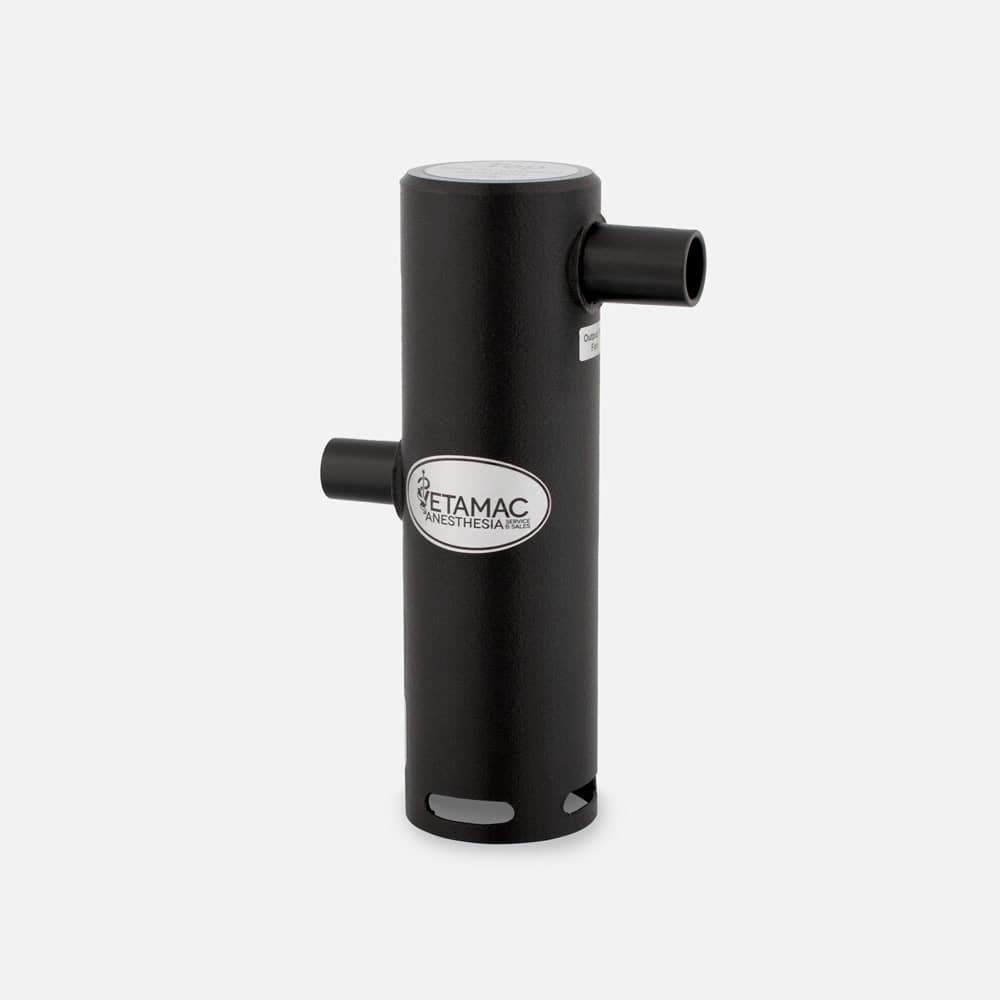
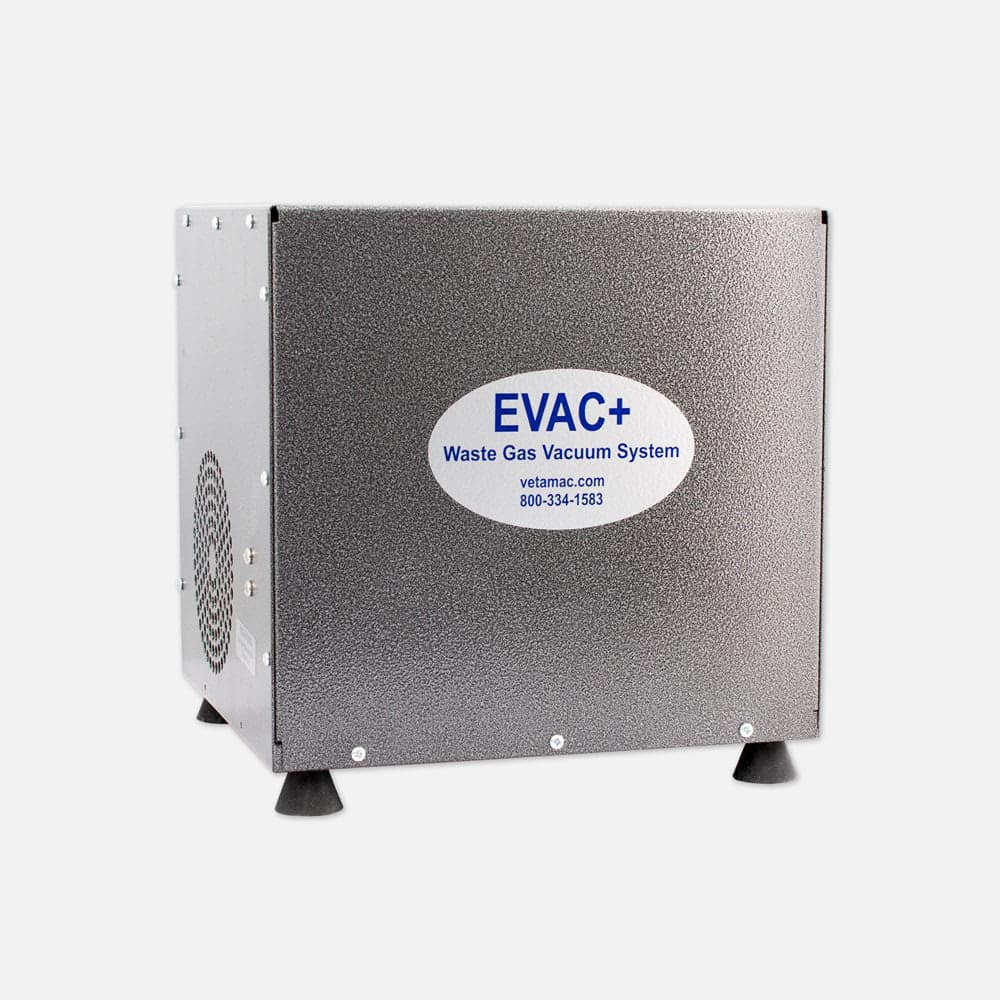
The vacuum system requires a vacuum pump and a copper piping system (usually 3/8″) with quick connect outlets at each anesthesia station. This system also requires the use of an atmospheric interface, also known as an atmospheric equalizer. This device is usually mounted on the anesthetic machine and prevents the system from actively emptying the rebreathing bag. The interface controls the vacuum and allows room air to enter the system to prevent putting a vacuum on the breathing bag. The vacuum interface also has a bag attached to capture the WAG when the breathing bag is emptied quickly.
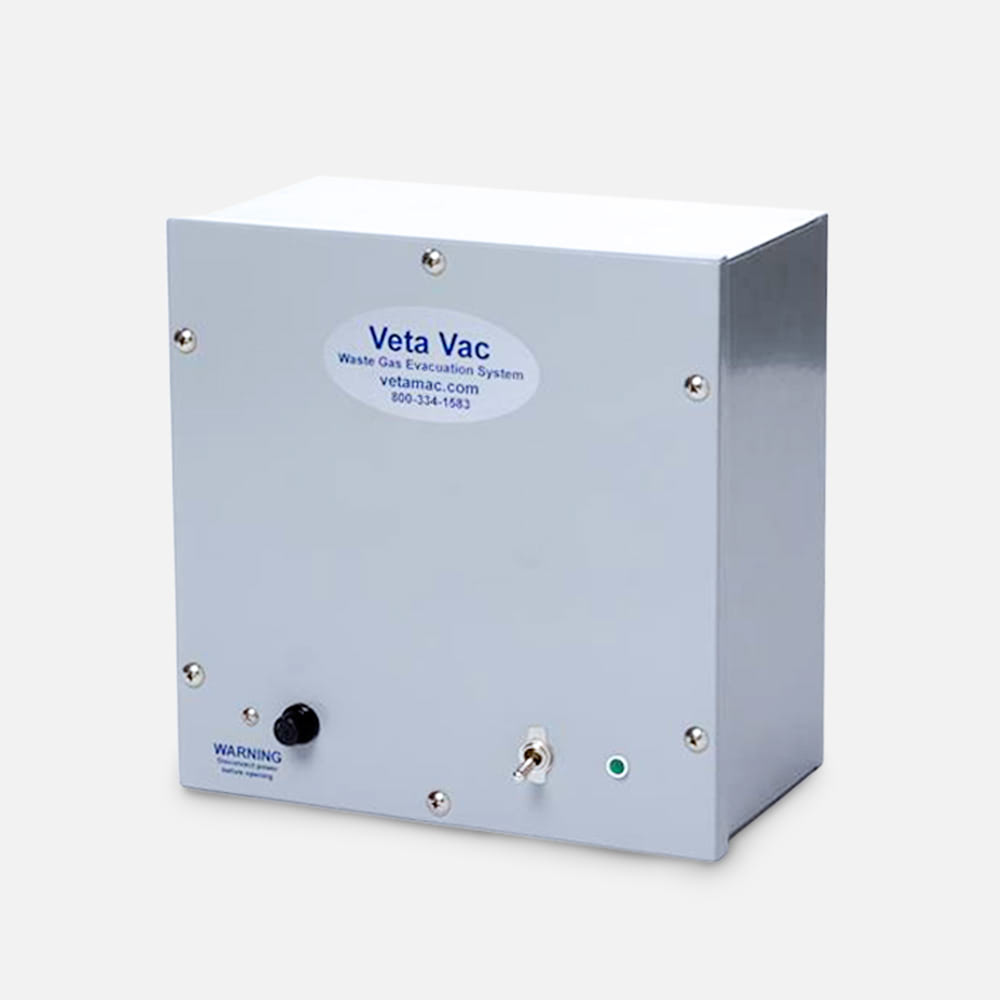
The flow system requires a small enclosed fan vented to the outside that is then connected to a piping system of 1 1/2″ PVC pipe. Each evacuation station must have a balancing valve that will assure that each station receives the same flow. An atmospheric interface must be used since this system can create a slight negative pressure on the breathing bag. This interface does not have a bag attached, so any time the breathing bag is emptied rapidly, there may be a small amount of WAG escape into the room. The flow through the system is approximately 95% room air and 5% WAG.
There is an active system (flow) that is mounted on the machine that is self-contained with the atmospheric interface built into the device. This system is effective but since each machine must have it’s own device, it is not economical if there are more than two anesthetic machines in the practice.
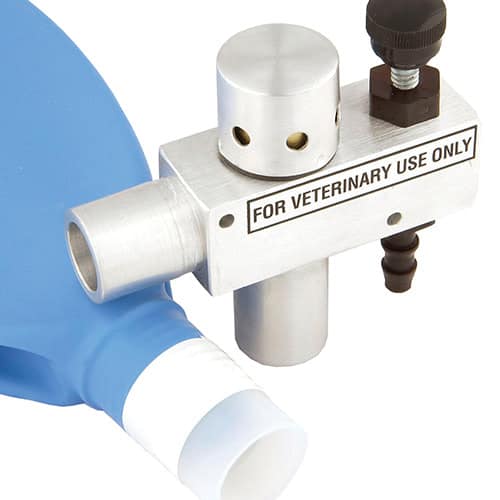
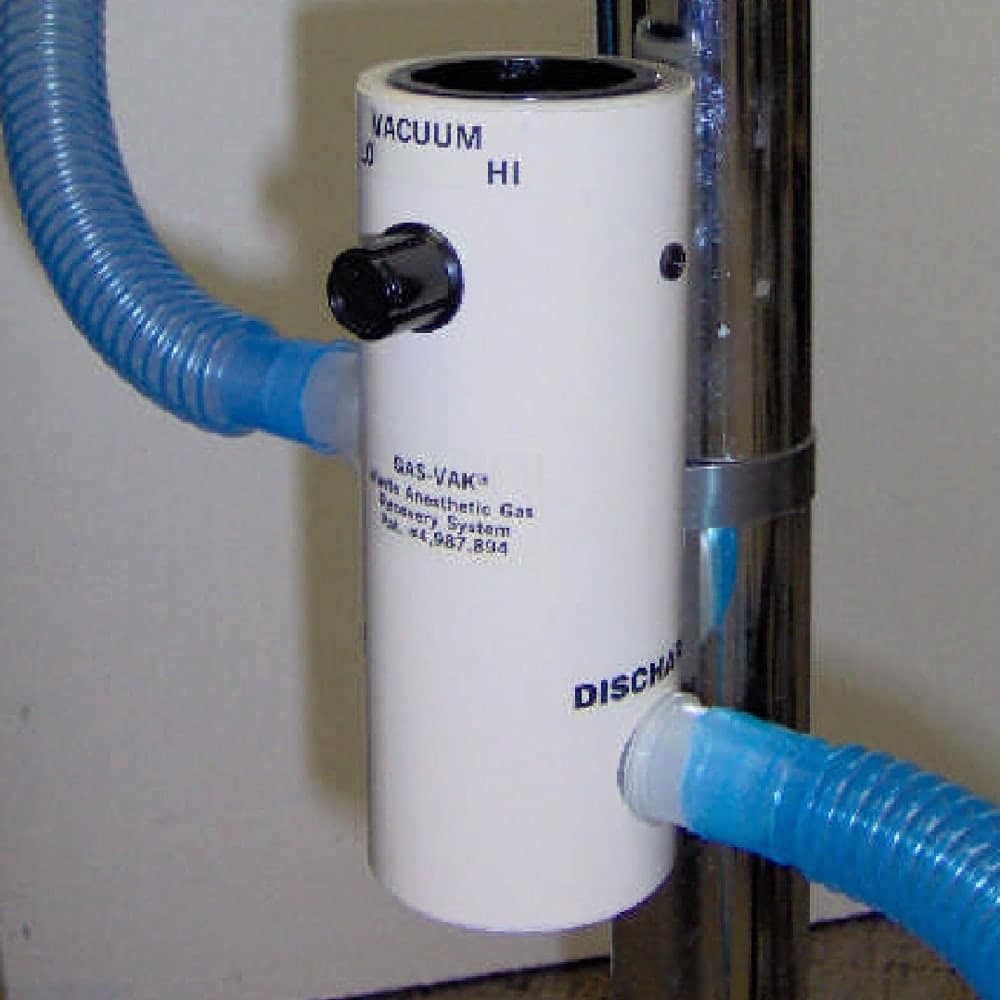
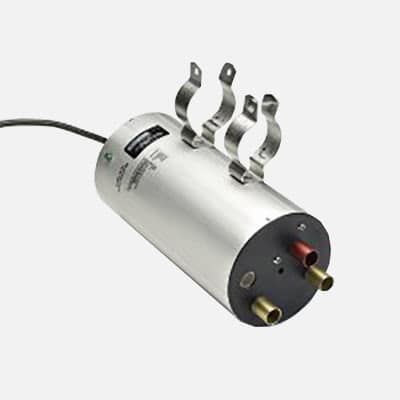
An anesthetic machine that is using an active system to remove WAG must have a closed connection between the pop-off valve and the atmospheric interface. The interface must then be properly connected to the evacuation system. This allows the WAG to move passively from the pop-off valve to the interface and then to be actively removed to the outside.
This has been a quick overview of the various methods to evacuate WAG. If you have questions, please call or email. The next issue will discuss exposure to WAG and acceptable limits of exposure.
| Components | Vacuum | Flow |
|---|---|---|
| Piping | 3/8″ – 1/2″ Copper | 1 1/2″ PVC |
| Interface Required | Yes | Yes |
| Balancing Valve Required | No | Yes |
| Cost | Higher | Lower |
| Effective | Yes | Yes |
New Products, Veterinary Specialist Articles