How to Clean the Suction Components on Your Veterinary Dental Unit
Clean and maintain your veterinary dental unit’s suction components with our simple, step-by-step cleaning guide…

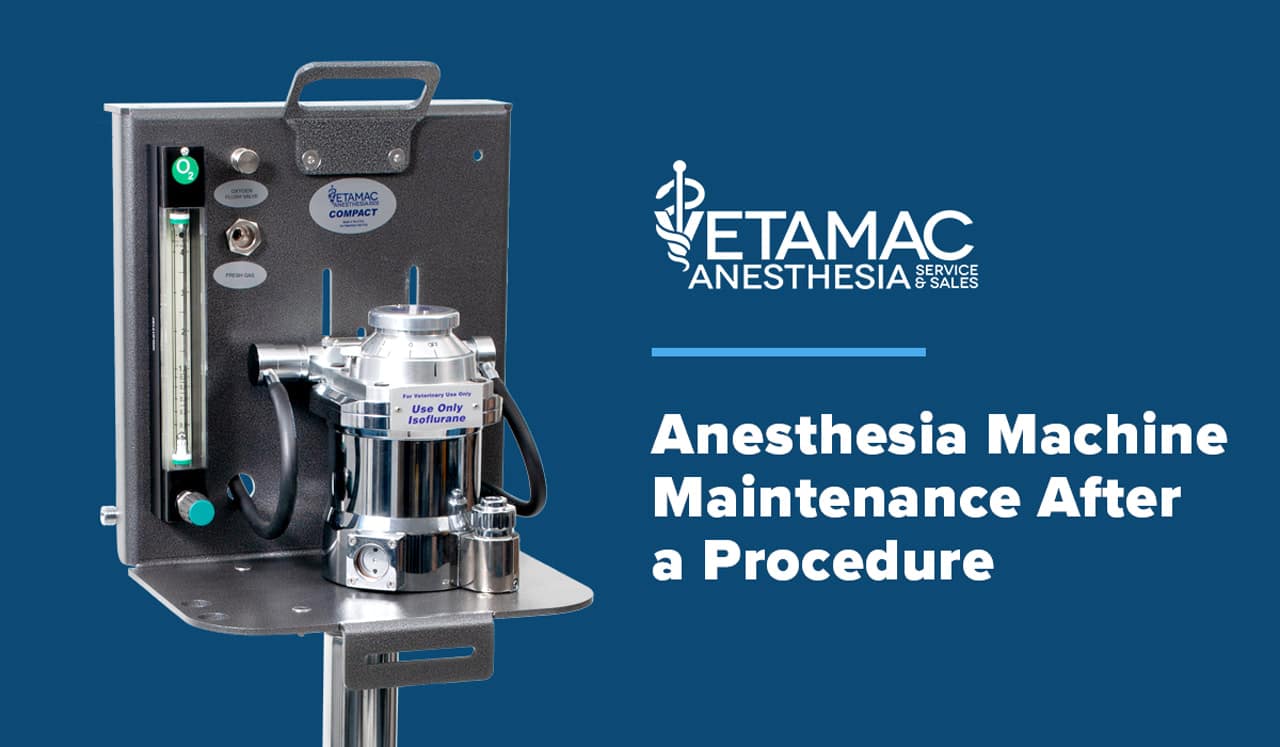
Just as important as the anesthesia machine preparation before a procedure is the maintenance and cleaning after a procedure. With proper cleaning and maintenance, the life of the equipment will be extended and patient safety will be enhanced.
Remove all breathing circuits and bags. Breathing circuits can be cleaned with mild soap and water. Rinse well and hang to dry. Do not attempt to spin dry the circuits as this will cause damage to some. If holes are discovered, throw away the circuit or bag and replace with new items. The use of porous tape on breathing accessories should never be attempted and will not stop hazardous leaks.
Expired absorbent granules must be changed. Expired absorbent is indicated when 2/3 of the granules in the canister are violet or the granules do not crumble easily. Be careful not to overfill the absorber canister when refilling, as overfilling will cause channeling. Channeling can occur in the center of the canister, leaving the outside granules white, leading the anesthetist to believe the absorbent in the middle is not expired. Also, be careful if using prepack absorbent canisters to remove all plastic and sticker wrapping, which can cause a blockage.
If an active waste gas evacuation system is in use, leave the unit on for at least one hour after the last procedure. This will ensure all excess waste gas in the lines will be safely evacuated to the outside of the building. Gas will always travel the path of least resistance. If activated charcoal canisters are utilized as a passive evacuation system, they must be weighed after every procedure. Time as a measurement should not be used because of inaccuracy. The canisters need to be upright. Activated charcoal canisters must be placed in a holder because all gas entering the canister must exit through the holes in the bottom. Always check the bottom of the canisters for stickers or packaging that will cause a blockage. If nitrous oxide is being used, you should not use charcoal canisters, as they do not absorb the gas.
Finally, periodic preventive maintenance should be performed on all anesthesia machines and vaporizers. One study determined that an adequately maintained 10-year-old anesthesia machine had no more failures than a new machine. Lack of a preventative maintenance program may lead to an unacceptably high rate of breakdowns, premature replacement of major equipment, and unnecessary risks (Dorsh and Dorsh, 2008).
Works cited
Anesthesia for Veterinary Technicians by Susan Bryant
Understanding Anesthesia Equipment, Dorsch and Dorsch